
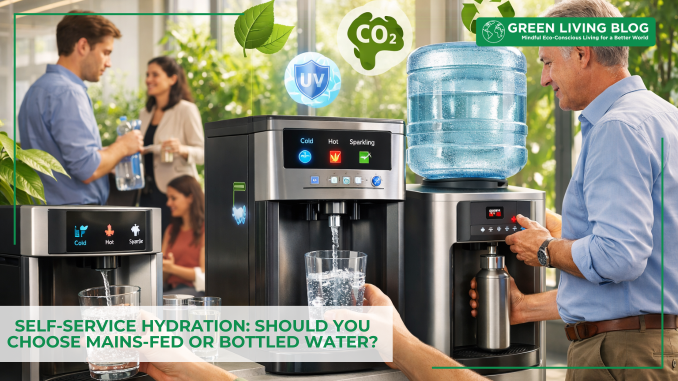
Finding the right water dispenser for your premises can be tricky.
That’s because there are several – often competing – criteria to weigh up when deciding on which type of self-service hydration system to go with.
The choice becomes even more challenging when it is influenced not only by practical considerations but also by environmental concerns and the potential energy savings from using a hot water bottle.
For example, bottled water is heavy on plastic, but at the same time, it requires a smaller amount of energy to chill and deliver the liquid than a mains-fed water dispenser.
And while eco issues are obviously important, a host of other factors come into play when choosing a hydration system, not least installation costs, ease-of-use, and maintenance time.
So how do you decide which water dispenser is right for you? Let’s find out.
Differences
The main differences between the two types of water delivery systems can be found in the mechanisms used to serve up the water.
With a mains-fed system, as the name suggests, the water comes from the never-ending supply of the property’s mains water, whereas with a bottle-fed system, the liquid is delivered to users via a large container fixed above or below the main dispenser.
To summarise:
- Bottle-fed dispensers are standalone units that use a 15L or 18.5L bottle installed above the dispenser to provide the water.
- Mains-fed dispensers or Point of Use (POU) systems connect directly to your mains water supply, giving users an unlimited supply of purified water.
Environmental Concerns
Mains-fed hydration systems are generally considered more eco-friendly than their bottle-fed competitors.
That’s because with a mains-fed system, no bulky plastic bottles need to be transported to the premises every day to refill the dispensing station, eliminating the plastic and the carbon needed to power the vehicle that brings you fresh water each day.
And while mains-fed systems obviously need current to deliver the stream of water and chill or heat it if those options are available, they can still boast an overall much lower carbon footprint than bottle-fed alternatives.
In fact, according to the people at AquaCool, bottled water’s carbon footprint is 300 to 1,000 times higher than that of a mains-fed supply.
Options
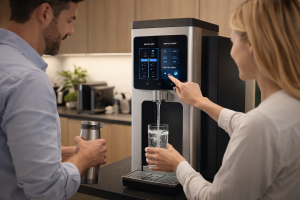
Of course, as important as environmental factors are when weighing up a water dispenser, a host of other factors also come into play.
Mains-fed dispensers offer a range of convenient options that bottle-fed, eco-friendly hydration systems typically don’t.
So while both types of system can chill and heat the water they dispense, a mains-fed system will generally be better at keeping the liquid at a consistent temperature.
And if you’re a fan of sparkling water or are looking for advanced UV filtration to make your water more potable, you will generally need a mains-fed system.
Water Quality
Given what’s been said so far, you might think the choice is simple – mains-fed systems win hands down.
But it’s not as simple as that.
With a mains-fed system, the quality of the water you serve up to people is only as good as the local supply that feeds it, so if you have hard water or your water comes with a chlorinated aftertaste, it might not be ideal.
On the other hand, with a bottle-fed dispenser, the liquid is typically sourced from the same spring, which means the taste profile is consistent – you know you’re going to get the same crystal-clear water glass after glass.
Installation Cost
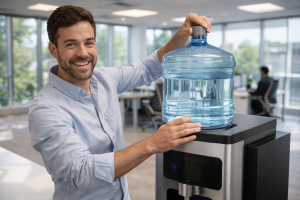
Furthermore, if up-front costs are a major factor for you, then look no further than a bottle-fed system.
This type of hydration system is essentially plug-and-play – you simply set up the station, attach a bottle and let gravity do its work of delivering the water.
Conversely, mains-fed systems need to be plumbed into the mains water, usually by a professional plumber, and also need regular maintenance and filter changes.
Of course, if you rent your system, there are ongoing costs to take into consideration, but a bottle-fed system will be cheaper upfront.
User Numbers
A major factor at play in the choice of a hydration system is the number of users.
In high-use locations (20+ people) where demand for refreshment is high, you will probably want to opt for a mains-fed system.
But if you need to keep smaller numbers hydrated daily, a bottle-fed system can typically meet all the hydration needs of users.
Conclusion
Choosing the right water dispenser is not as easy a decision as it might seem – particularly if you want to keep people refreshed in an eco-friendly way.
The good news is that a company like Aquacol has a system for every user, and thanks to modern technology like sleep modes and smart sensors, the energy profile of both types of hydration systems has never been lower.

Author Profile

- Passionate content creator, contributor, freelance writer and content marketing allrounder.
Latest entries
 DictionaryFebruary 26, 2026Geothermal Plants – The Solution to Lower Carbon Energy?
- BusinessFebruary 20, 2026How Sustainable Businesses Navigate Complex Payment Processing Challenges
- DictionaryFebruary 13, 2026What is Climate Change Evidence?
- DictionaryFebruary 4, 2026What Does Net Zero Mean?




Leave a Reply
You must be logged in to post a comment.