
Opinion Piece by Ashley Sobel
When we talk about sustainable beauty and wellness, we usually focus on packaging, cruelty-free testing, and carbon footprints. But the ingredient itself matters just as much.
Why Supplement Sourcing Matters for Sustainable Living
Where a supplement comes from, how the animals were raised, and what goes into the manufacturing process all have direct environmental consequences. For eco-conscious consumers, that supply chain is part of the product.
This article breaks down what you need to know about collagen sourcing, what the greener options actually look like, and how to make a more informed choice.
What Is Collagen and Why Do People Supplement with It?

Collagen is the most abundant structural protein in the human body. It forms the scaffolding for skin, joints, tendons, and bones. From around the age of 25, the body produces less of it each year.
Supplementing with hydrolysed collagen peptides aims to support this decline. Research published in the Journal of Cosmetic Dermatology found that regular collagen supplementation improved skin elasticity and hydration in participants over an 8-week period.
Demand has risen sharply in the UK wellness market, which means so has the importance of understanding what is actually inside the product you choose.
The Sourcing Question: Grass-Fed, Marine, and Synthetic Options
1. Bovine Collagen
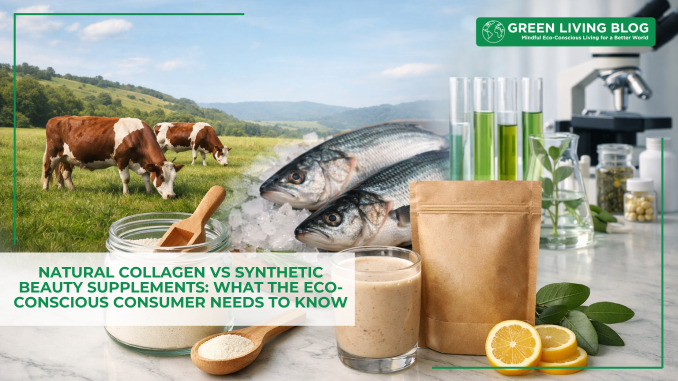
Bovine collagen is derived from the hides of cattle. The sustainability profile depends heavily on farming standards. Products sourced from grass-fed, pasture-raised cattle have a lower environmental footprint and typically reflect higher animal welfare standards.
Grass-fed bovine collagen also tends to produce type I and type III collagen, which are most relevant for skin and joint support.
2. Marine Collagen
Marine collagen is extracted from fish skin and scales, materials that would otherwise be discarded during food processing. When sourced responsibly, this makes it a lower-waste option with a strong sustainability argument.
It is also type I collagen and has a smaller molecular structure, which may improve absorption rates compared to bovine sources.
3. Synthetic and Plant-Based Alternatives
There is no plant-based collagen available commercially because plants do not produce protein. Some products labelled collagen boosters contain vitamin C and amino acids that support the body’s own collagen synthesis, but they are not the same as collagen supplementation.
| Source | Eco Credentials | Collagen Type |
| Grass-fed bovine | Pasture-raised, lower waste | Type I and III |
| Wild-caught marine | Uses fish byproduct, lower footprint | Type I |
| Farmed fish marine | Higher water use, variable standards | Type I |
| Synthetic / vegan booster | No animal use, supports synthesis | Not collagen itself |
What to Look for When Choosing a Sustainable Collagen Product
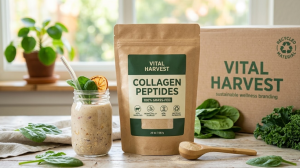
The most important factors are sourcing transparency, processing method, and ingredient simplicity. A product with a short ingredient list and clear provenance is almost always preferable.
For a clean, single-ingredient option, the Collagen supplement from Naked Nutrition is sourced from grass-fed, pasture-raised bovine hide with no artificial additives, making it a practical choice for those prioritising both efficacy and sourcing standards.
Hydrolysed collagen peptides dissolve easily in cold or hot liquids, which means no need for single-use sachets or excessive packaging. A resealable pouch or tub reduces waste further.
“Consumers are increasingly asking not just whether a supplement works, but how it was made and where it came from. That shift in expectation is raising standards across the entire industry.”
– Dr. Rhonda Patrick, Biomedical Scientist and Nutritional Health Researcher at St. Jude Children’s Research Hospital and the Children’s Hospital Oakland Research Institute.
Many conscious customers now prefer to make their own skin cleansers, cremes and beauty products to ensure they source the natural ingredients themselves, but supplements still require ethical sourcing so they need to trust those suppliers.
Frequently Asked Questions
1. Is collagen supplementation ethical for eco-conscious consumers?
It depends on sourcing. Bovine collagen from grass-fed, regenerative farms and marine collagen from sustainably caught fish both carry reasonable ethical credentials when verified. Always check whether the brand publishes sourcing information.
2. How long does collagen take to show results?
Most clinical studies showing skin and joint benefits used supplementation periods of 8 to 12 weeks. Consistency matters more than dose size within the standard 5 to 10g daily range.
3. Is hydrolysed collagen the same as regular collagen?
Hydrolysed collagen has been broken down into smaller peptides through enzymatic processing. This improves solubility and makes it easier for the body to absorb, which is why most quality supplements use this form.
4. Can I get enough collagen from food alone?
Bone broth, skin-on fish, and slow-cooked cuts are natural collagen sources. Supplementing allows a consistent, measured intake without relying on diet variation, which is why many people use both approaches together.
Author bio:
Ashley Sobel, RD, CDN is a licensed nutritionist with over five years of experience at Naked Nutrition, where she specializes in creating nutritional and wellness content. Ashley is passionate about helping readers make informed choices to support a healthy lifestyle through evidence-based guidance and practical tips.

Author Profile

- Always on the hunt for the latest green living news, tips and stories, proudly sharing them with readers all around the world to make this planet a better place.
Latest entries
 Green Expert GuidesMarch 13, 2026Natural Collagen vs Synthetic Beauty Supplements: What the Eco-Conscious Consumer Needs to Know
- Green Home GuidesFebruary 27, 2026How Weather Measuring Tools Can Help Create Thriving Biodiverse Outdoor Spaces
- Green News ReleasesFebruary 14, 2026Algae Dynamic Biotech Parses 45Z Credit Rules
- DictionaryJanuary 19, 2026What is Microplastics Pollution & How to Avoid Microplastics




Leave a Reply
You must be logged in to post a comment.