
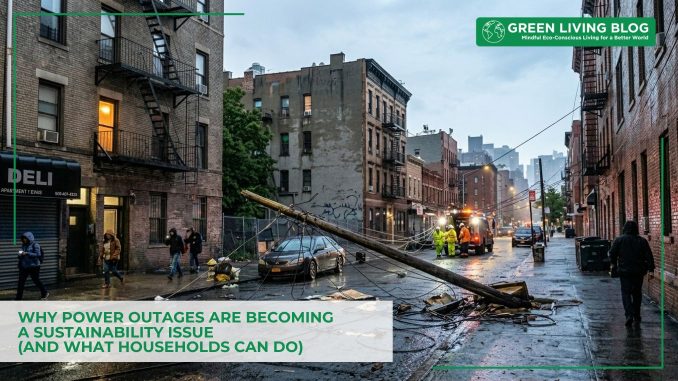
In recent years, power outages have shifted from occasional inconveniences to increasingly frequent disruptions affecting millions of households worldwide.
While most people see outages as a short-term problem, they are also becoming a growing sustainability issue—with long-term implications for energy systems, infrastructure, and everyday life.
Understanding why outages are increasing—and how households can respond—has never been more important.
Why Power Outages Are Increasing

There isn’t a single cause behind the rise in power outages. Instead, it’s the result of several overlapping trends:
1. Extreme Weather Events
Storms, heatwaves, floods, and wildfires are becoming more frequent and intense. These events put significant pressure on electrical grids, often leading to large-scale outages.
2. Aging Infrastructure
Many power grids were built decades ago and are not designed to handle modern energy demands or climate stress. As infrastructure ages, failures become more common.
3. Growing Energy Demand
With more devices, electric vehicles, and digital infrastructure, energy consumption continues to rise—sometimes faster than grids can adapt.
4. Grid Complexity
Modern grids are more interconnected and complex. While this improves efficiency, it also increases the risk that a single failure can cascade across larger areas.
Why this is a Sustainability Problem
At first glance, outages may not seem like a sustainability issue—but they have several hidden environmental and societal impacts:
· Increased Reliance on Fossil Fuel Generators
When the grid fails, many households turn to gas or diesel generators. These produce emissions, noise pollution, and ongoing fuel dependency.
· Food Waste and Resource Loss
Extended outages often lead to spoiled food, especially when refrigeration is lost. This contributes to unnecessary waste and environmental impact.
· Strain on Emergency Systems
Hospitals, emergency services, and communication networks depend on reliable electricity. Frequent outages increase the strain on backup systems.
· Reduced Energy Resilience
A sustainable energy system isn’t just about clean power—it’s also about reliability. Frequent outages highlight weaknesses in current infrastructure.
The Data Behind the Trend
The increase in outages is not just anecdotal—it’s supported by data.
Recent research and publicly available reports show that outage frequency and duration have increased in many regions over the past decade, particularly due to extreme weather and infrastructure challenges.
For a deeper breakdown of global trends, causes, and real-world data, see these
👉 global blackout statistics
How Households Can Respond

While large-scale infrastructure changes take time, households can take practical steps to become more resilient.
1. Reduce Dependency on the Grid
Energy efficiency measures—such as LED lighting and efficient appliances—help reduce overall reliance on grid power.
2. Prepare for Short-Term Outages
Basic preparedness includes:
- backup lighting
- charged power banks
- emergency communication options
These small steps can make outages far less disruptive.
3. Consider Renewable Backup Solutions
Solar-based backup systems are becoming increasingly popular as a cleaner alternative to traditional generators.
Unlike fuel-powered systems, solar solutions:
- produce no emissions
- require minimal maintenance
- can be used both during outages and everyday life
4. Think Long-Term: Energy Resilience
Instead of reacting to outages, households can shift toward energy resilience—being prepared for disruptions without relying entirely on external systems.
The Bigger Picture: From Reliability to Resilience
The conversation around energy is changing.
It’s no longer just about how electricity is generated—but also about how reliably it can be delivered. As outages become more common, resilience is becoming a key part of sustainability.
Households that invest in preparedness and cleaner backup solutions are not only protecting themselves—they are also contributing to a more stable and sustainable energy future.
Final Thoughts
Power outages are no longer rare events—they are a growing part of modern life. And while they may seem temporary, their impact on sustainability, infrastructure, and daily living is significant.
By understanding the causes behind outages and taking practical steps toward preparedness and resilience, households can reduce both disruption and environmental impact.
In the end, sustainability isn’t just about clean energy—it’s about reliable energy when it matters most.

Author Profile

- Eco Warrior by day, Eco Blogger by night trying to get the eco balance right.
Latest entries
 EnvironmentApril 9, 2026Why Power Outages are Becoming a Sustainability Issue (And What Households Can Do)
- Green Business NewsMarch 13, 2026How Large-Capacity Above Ground Storage Tanks Streamline Operations & Cut Deliveries
- Best practicesFebruary 20, 2026How To Reduce Waste Through Smarter Office Supply Choices
- Green GuidesNovember 3, 2025The Beginner’s Guide to Making Your Own Nontoxic Candles at Home



Leave a Reply
You must be logged in to post a comment.