
Summary:
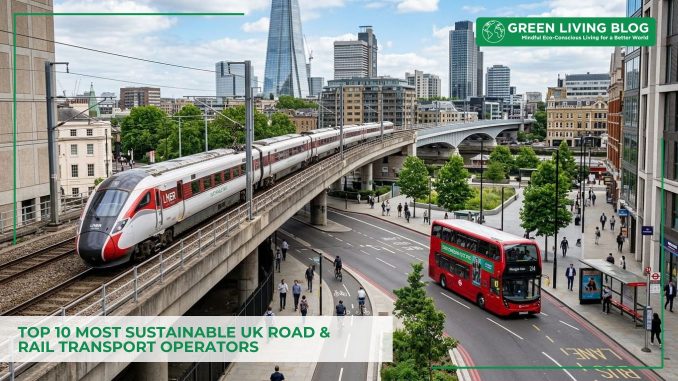
- More UK travellers than ever are demanding eco-friendly transport options, with buses and trains now seen as the preferred alternatives to driving for both environmental and practical reasons.
- A full double-decker bus is a replacement for 75 individual cars on the road, which can unclog city roads and motorways.
- Choosing the train over driving can cut a typical UK journey’s carbon footprint by 67%, and on some domestic and international air routes, rail travel slashes emissions by up to 95% compared to flying.
- If every UK resident swapped just one car journey each month for bus or coach, it would eliminate a staggering one billion car trips and save two million tonnes of CO2 every year.
- The good news is that in the UK, prominent national and regional green transport operators are investing in zero-emission buses and all-electric trains.
- Electric buses and trains are approximately 3 times more energy-efficient than diesel, and it is anticipated that green transport operators will reduce their fares, especially as spikes in oil prices wouldn’t directly affect costs.
Note: All details are correct at the time of publishing but may be subject to change.
Every time you travel by bus, coach, or train instead of driving, you’re part of the solution to air pollution. Your choice reduces road congestion, cuts carbon emissions, and improves air quality for everyone.
But even within public transport in the UK, some eco-friendly transport operators are leading the way and are going further to deliver genuinely sustainable options for their passengers.
In this guide, we focus on eco-friendly transport options by road and rail, and we compare the country’s leading bus and rail operators on their green credentials and progress.
We’ve left out car fleets on purpose as even electric cars can’t compete with the overall environmental benefits of taking the bus or train instead.
Also read: What does Net Zero mean?
Top 5 Green Bus Companies in the UK
1. National Express (Mobico Group)

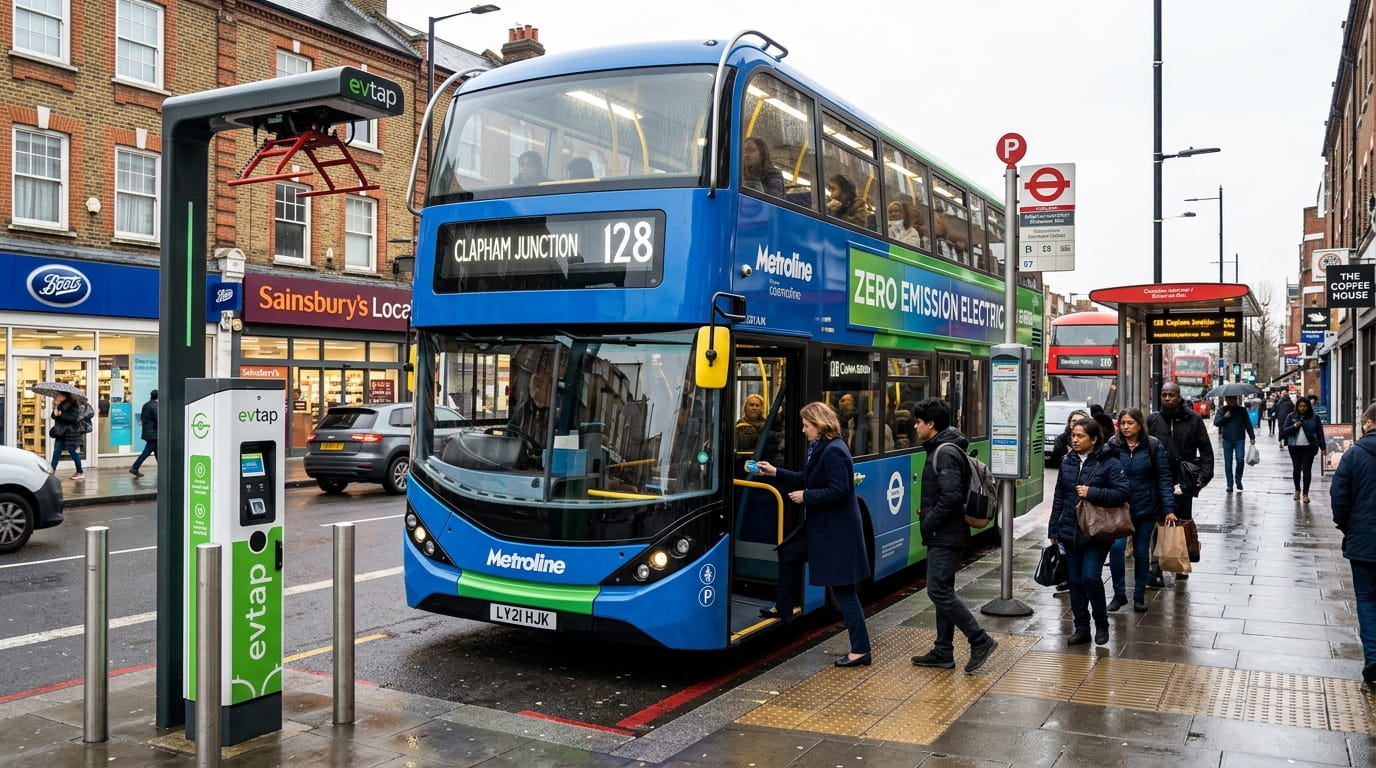
National Express is a leader in rapid decarbonisation, especially in the West Midlands. It works towards a clear goal of having a fully zero-emission fleet and has major investments in sustainable depot charging.
- Types of buses in use: Electric and hydrogen double-decker buses; West Midlands fleet is 100% Euro VI or zero-emission
- Plan for 100% zero-emission buses: UK bus fleet to be fully zero-emission by 2030; no more diesel bus purchases
- Depots and supporting infrastructure: Yardley Wood depot with advanced charging; Perry Barr depot upgrade; second-life battery storage to balance energy
- Regions and cities covered: Focused on the West Midlands (Birmingham, Solihull, Coventry, Walsall, and the Black Country); spearhead of Coventry’s all-electric city plan
2. FirstGroup (First Bus)

FirstGroup is one of Britain’s largest and most eco-friendly transport operators. It serves millions across major cities and regions. It leads the sustainable transport sector because of its early commitments to net-zero and innovation in both vehicle technology and depot sustainability.
- Types of buses in use: Diesel, battery-electric, and hydrogen-powered buses; actively repowering old diesel buses into electric models
- Plan for 100% zero-emission buses: Committed to a fully zero-emission fleet by 2035; stopped buying new diesel buses from December 2022; 15% of its fleet is now zero-emission
- Depots and supporting infrastructure: Three net-zero depots in York, Leicester, and Norwich (solar panels, 100% renewable electricity); fast-charging at ten depots
- Regions and cities covered: Over 20% of the UK population served; operating in York, Leicester, Norwich, West Yorkshire, and half of the UK’s 15 biggest urban areas
3. Go-Ahead Group

Go-Ahead operates the UK’s largest fleet of zero-emission buses and leads on depot innovation and air-quality tech.
- Types of buses in use: Battery-electric, hydrogen fuel cell, and tram-style electric buses; unique air-filtering models in Southampton
- Plan for 100% zero-emission buses: Fully zero-emission by 2035; no new diesel buses purchased after 2025
- Depots and supporting infrastructure: Over 85 depots; UK’s first all-electric bus garage (Waterloo); 104-charger Cowley House depot in Oxford; pantograph rapid-charging in London
- Regions and cities covered: Largest bus operator in London; services in Brighton & Hove, Oxford, Plymouth, Cornwall, East Yorkshire, the North East, and Manchester Bee Network
4. Stagecoach
Stagecoach operates extensive networks across the UK, with a strong focus on electrification and carbon reduction. Its bus fleets are a vital part of city life in many regions.
- Types of buses in use: Battery-electric buses, including double-deckers from Alexander Dennis
- Plan for 100% zero-emission buses: Targeting a zero-emission fleet by 2035 and full carbon neutrality by 2050
- Depots and supporting infrastructure: Charging points at Network Oxford site, powered by the Oxford Superhub
- Regions and cities covered: Wide presence in Manchester, Yorkshire, the West Midlands, Oxfordshire, and North/East Scotland; major electric bus deployment in Oxford
5. Arriva

Arriva is a major eco-friendly transport operator across the UK and Europe. It is a driver of sustainable transportation in the UK, with its electric and hydrogen bus trials and a dedicated Zero Emission Institute. The company is also a pioneer in renewable-powered depots.
- Types of buses in use: Electric double-decker buses in the UK; hydrogen bus trials not in UK, but ongoing in Europe (Netherlands)
- Plan for 100% zero-emission buses: Zero Emission Institute coordinates a staged transition to zero-emission fleets
- Depots and supporting infrastructure: All UK depots, stations, and offices on 100% renewable electricity since 2018; rainwater used for cleaning
- Regions and cities covered: Operations in cities such as Leicester and London; recently scaled back on some cross-county routes
Top 5 Green Train Companies in the UK
1. Avanti West Coast

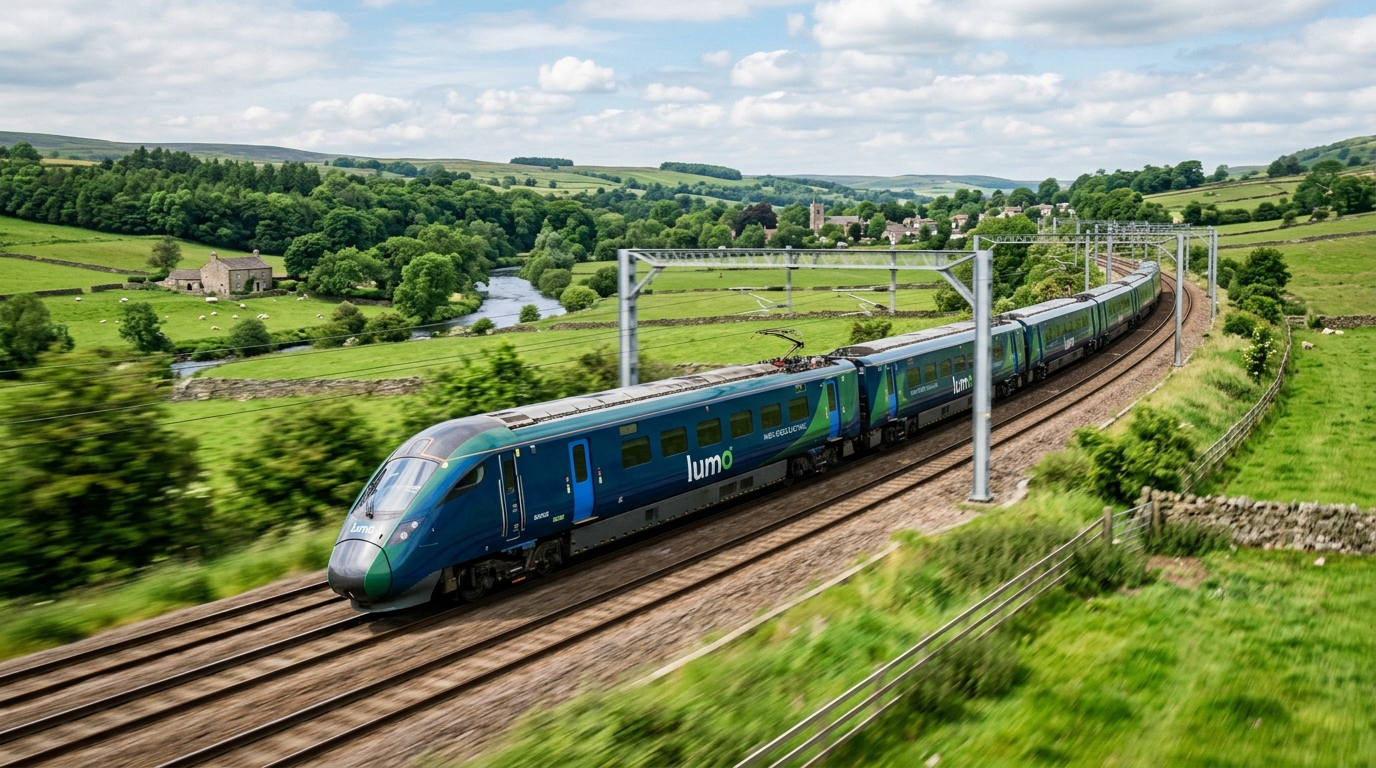
Avanti runs high-speed, long-distance services on the West Coast Main Line, and connects London with major cities in England, Scotland, and Wales. The company is focused on new electric and bi-mode trains and has a strong waste reduction record.
- Types of trains in use: Refurbished Pendolino electric trains and new Hitachi Evero electric and bi-mode trains, which produce a third of the emissions of older diesel models
- Plan for Net Zero: Aims to be net zero carbon by 2031, with ongoing transition to more electric trains
- Stations and infrastructure: Manages 16 major stations, all with smart energy systems to cut waste and emissions
- Regions and routes covered: London Euston to Manchester, Birmingham, Liverpool, Glasgow, Holyhead, and other key cities on the West Coast Main Line
2. Greater Anglia
Greater Anglia has replaced its entire train fleet with energy-efficient models and serves towns and coastal destinations across East Anglia. The operator stands out for its circular economy, waste diversion, and wildlife initiatives.
- Types of trains in use: Modern, lighter trains with regenerative braking; entire old fleet replaced
- Plan for Net Zero: Committed to net zero for non-traction emissions by 2050/51.
- Stations and infrastructure: 134 stations, 128 with local “station adopters”; 33 accredited as ‘Wildlife Friendly’
- Regions and routes covered: East Anglia, including Essex, Norfolk, Suffolk, Cambridge, and rural and coastal stations
3. TransPennine Express (TPE)

TransPennine Express links major northern cities and Scotland with a growing fleet of electric trains. It is a leader in decarbonising routes and holds top certifications for sustainability and infrastructure.
- Types of trains in use: Nova 1 and Nova 2 electric/bio-mode trains, plus Class 185 units; electric trains already running on several routes
- Plan for Net Zero: Has near-term science-based targets validated by SBTi, improving carbon performance by 19% since 2019/20
- Stations and infrastructure: Participates in the £10.7bn Transpennine Route Upgrade (TRU) for a fully electric corridor, and invests in energy-saving upgrades at stations
- Regions and routes covered: Services across the North of England and into Scotland, including Manchester, Leeds, Liverpool, Edinburgh, and York
4. Caledonian Sleeper

The Caledonian Sleeper offers overnight rail travel between London and major Scottish cities. The trains feature modern sleeper cabins and lay a strong focus on reducing travel carbon footprints.
- Types of trains in use: Fully upgraded sleeper trains with modern cabins, en-suite rooms, and cashless operation
- Plan for Net Zero: Part of Scottish Rail Holdings’ push to decarbonise Scotland’s passenger railways by 2035, with operations built around low-emission overnight travel
- Stations and infrastructure: Caledonian Sleeper says that by removing the need for guests to book hotels, each sleeper trip saves an additional 13.9kg CO2e per passenger
- Regions and routes covered: Overnight connections from London to Edinburgh, Glasgow, Aberdeen, Inverness, and Fort William, covering both Highlands and Lowlands
5. CrossCountry

CrossCountry operates the UK’s most extensive passenger network. It links cities from Aberdeen to Penzance. While currently diesel-powered, it is investing in greener tech and broader social and environmental sustainability.
- Types of trains in use: Diesel-only fleet of Voyagers and Turbostars, with new low-carbon trains and stop-start technology in the pipeline
- Plan for Net Zero: Science-based targets for 63% cut in direct emissions by 2035; new fleet expected by 2035
- Stations and infrastructure: Engine idling is limited to 5 minutes at enclosed stations, cutting pollution. All properties have real-time energy monitoring and are moving to 100% green energy
- Regions and routes covered: Connects seven of Britain’s ten largest cities, with routes stretching from Scotland to the Southwest and Wales
Whether you ride by train or bus, not all public transport is equal for the planet. The eco-friendly transport operators highlighted here are setting the standard for sustainability in the UK. So next time you travel, choose a company leading the way on sustainable transportation in the UK or suggest more providers we have missed to our team.

Author Profile

- Online Media & PR Strategist
- Blogger and Educator by Passion | Senior Online Media & PR Strategist at ClickDo Ltd. | Fascinated to Write Lifestyle Blogs in News & Education I have completed a journalism summer course at the London School of Journalism and manage various blogs.
Latest entries
 List postMarch 16, 2026Top 10 Most Sustainable UK Road & Rail Transport Operators
- List postFebruary 3, 2026Top 20 Green Sustainability Events to Attend in 2026
- Green ShoppingJanuary 20, 20266 UK Brands Offering Sustainable Gifts All Year Round
- BusinessOctober 29, 2025Top 6 UK Government Green Funds & Grants for SMEs




Leave a Reply
You must be logged in to post a comment.