
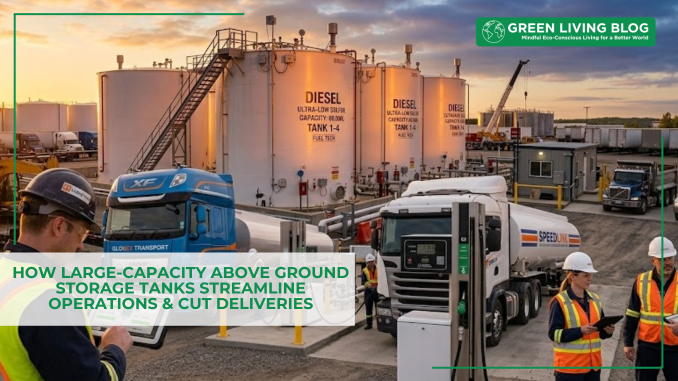
This is no longer viewed just as an operational cost line item but as part of running a business and how you maintain your business every day!
The difficulty associated with poor fuel storage capability creates additional issues. In general terms, fuel is still delivered “just-in-time,” therefore, fleet operators are subject to variable price changes, possibly resulting in late deliveries.
Fleet expansion and shorter-term project schedules will require more fuel storage capabilities than were available prior to an increase in fleet size!
Transitioning from smaller aboveground petroleum tank (AST) fuel storage capabilities to larger AST fuel storage capabilities will enhance an organization’s capability to effectively manage its fuel supply chain, shifting the operation of the fleet from being reactive to being pro-active, providing the competitive edge from lower administrative costs, increased equipment uptime, as well as generating long-term viability in an ever-changing energy market!
Maximizing Efficiency & Sustainability with Strategic Fuel Infrastructure
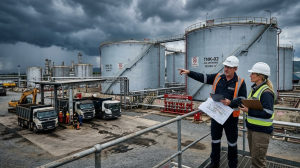
When an operation scales, the frequency of fuel deliveries often becomes a hidden drain on labour. Every time a tanker truck enters a job site or facility, it requires oversight, security clearance, and often a temporary halt in nearby activity. By investing in above ground storage tanks, companies can consolidate several “short-drop” deliveries into a single bulk load, drastically reducing the number of logistical “touches” required per month.
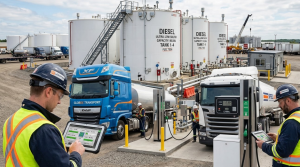
Beyond the physical delivery, large-scale storage allows for the integration of high-flow dispensing systems. Unlike smaller, portable tanks that may struggle with flow rate consistency, permanent large-capacity ASTs are engineered for speed. This means trucks spend less time at the pump and more time on the road. Furthermore, modern tank systems often incorporate advanced telematics. These sensors provide real-time data to operations managers, allowing them to automate inventory alerts and eliminate the manual “sticking” of tanks, which is both time-consuming and prone to human error.
The Economics of Bulk: Cutting Delivery Costs and Surcharges
The financial argument for larger capacity centres on the transition from “Less Than Truckload” (LTL) to full transport deliveries. In the fuel industry, delivery fees are often fixed or heavily weighted toward the first few hundred gallons. Smaller tanks force a cycle of frequent, low-volume refills that attract high “drop fees” and delivery surcharges.
- Bulk Purchasing Power: Moving to a 10,000-gallon or larger system allows a company to negotiate directly with fuel jobbers for “transport load” pricing, which is significantly lower than tank-wagon rates.
- Eliminating Emergency Premiums: Small tanks run the risk of “running dry” during peak seasons. Emergency, same-day deliveries often come with steep premiums that can wipe out a week’s worth of margin.
- Administrative Streamlining: Processing twenty invoices for twenty small deliveries costs significantly more in man-hours than auditing two- or three-monthly bulk invoices.
- Carbon Footprint Reduction: Fewer heavy-duty truck trips to your site reduce your indirect carbon emissions and wear-and-tear on facility pavement.
Operational Resiliency: Mitigating Supply Chain Volatility
Due to regional fuel shortages caused by either extreme weather or refinery maintenance issues, operational disruptions may last for several days within the United States. When there is only a two-day supply of fuel in a facility, such businesses will rely completely on their immediate supply chain. Large-capacity ASTs serve as an actual “buffer” to the short-term market disruptions, allowing businesses to remain resilient and uninterrupted when faced with a market shock.
Additionally, on-site reserves enable intelligent managers of businesses that wish to protect themselves from intraday price spikes through strategic planning. When market signals indicate an increase in price could occur, the ability to replenish a half-full 15,000-gallon tank at current rates will yield hundreds or even thousands of dollars in potential savings, versus having to purchase the same fuel on-demand.
What are the benefits of using aboveground rather than underground storage tanks? Although underground storage tanks allow for more space to be preserved on the surface, Aboveground Storage Tanks are more cost-effective to install, permitted and maintain. However, Aboveground Storage Tanks also allow for very easy visual inspection and thus allow for quick identification of minor maintenance issues before becoming a potential environmental liability.
Streamlining Compliance and Risk Management
Industrial storage has really grown since the days of the “steel box” type of tank. Today’s larger ASTM steel tanks have been designed to take away some of the difficult burden of overseeing compliance with environmental regulations. Almost every professional grade tank now includes a built-in second containment system (e.g., a tank inside of another tank). This satisfies the Federal EPA trained/tank and secondary containment regulations that are currently in effect for all regulated establishments without having to use expensive concrete dikes.
Centralizing and creating a large-capacity fuelling station also enhances security when compared to multiple smaller tanks being used throughout a facility. Having one high-capacity hub facility allows for better monitoring of access to that tank through the use of physical security controls and surveillance systems; thus, protecting against “fuel shrinkage” (a nice way of saying theft) and making sure all gallons are accounted for and linked to a specific vehicle or project code.
Under the SPCC (Spill Prevention, Control, and Countermeasures) rule or regulations, most companies are required to do a visual inspection of their tanks each month; however, larger tanks may require more formalized inspections by a qualified inspector using standard guidelines adopted from the Steel Tank Institute (STI) SP001. The time and cost involved in keeping your inspection records up to date will be a small cost compared to peace of mind and the operational value that bulk storage gives you.
Responsible Use and Compliance
When using a large-capacity storage/distribution system, there are certain regulations and compliance obligations that must be followed. In the United States, all locations with an aggregate above-ground storage capacity of over 1,320 gallons must have an SPCC (Spill Prevention, Control, and Countermeasure) written plan which details what the company will do to plan for and respond to oil spills. In addition, compliance with NFPA 30 (Flammable and Combustible Liquids Code) is required.
NFPA 30 specifies the minimum “setback” distances required between your tank and other structures such as property lines, buildings, or equipment. Although it is clear that there are significant benefits to bulk fuel storage systems, it is always best to consult with an environmental engineer and/or a qualified fuel service provider during the planning process to ensure that your proposed site layout complies not only with the requirements of the applicable local fire code but also any applicable federal environmental requirements.
Investing in Long-Term ROI for the Greater Good
Investing in a large capacity above ground storage tank can help to reduce your logistics cost, gain price leverage for bulk pricing, and enhance your security and sustainability of operations. By eliminating frequent, small deliveries, companies can direct their focus away from management of fuel toward their core business operations. Though there will be planning and compliance activities involved in making the transition from existing storage systems to a new large-capacity tank, the long-term return on investment will be seen in two main areas: increased operational resiliency and improved efficiency/cost-effectiveness across the entire enterprise.

Author Profile

- Passionate content creator, contributor, freelance writer and content marketing allrounder.
Latest entries
 Green Business NewsMarch 13, 2026How Large-Capacity Above Ground Storage Tanks Streamline Operations & Cut Deliveries
- DictionaryFebruary 26, 2026Geothermal Plants – The Solution to Lower Carbon Energy?
- BusinessFebruary 20, 2026How Sustainable Businesses Navigate Complex Payment Processing Challenges
- DictionaryFebruary 13, 2026What is Climate Change Evidence?


Leave a Reply
You must be logged in to post a comment.