
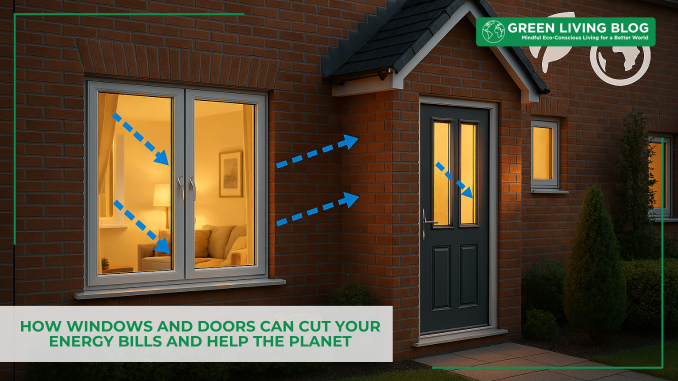
Your windows and doors are working against you. Heat escapes through the glass. Draughts sneak in where seals have worn down. Your boiler ends up running overtime to compensate.
The good news? Fixing this problem helps your wallet and the planet at the same time.
Where Your Heat Goes

Research shows a typical home loses roughly 18% of its heat through windows. So if you spend £100 on heating, about £18 of that goes straight out of the glass. Add doors into the mix, and some studies put total losses at 25% to 30%.
Single-glazed windows? They are the main culprit. Heat escapes through them at double the rate of standard double glazing. If your home still has them, a big chunk of your heating budget is warming up the pavement.
What New Windows Can Save You
The Energy Saving Trust worked out the figures. Swap single glazing for A-rated double glazing in a semi-detached house and the annual saving comes to roughly £140. Not huge, but it builds up.
U-values tell you how well a window keeps heat in. Double glazing sits somewhere between 1.2 and 1.4.
The Tech Inside Your Glass

Modern windows have more going on than you might think. Several technologies work together to trap heat indoors, as seen in many high-performance window solutions offered today.
Between the panes sits argon gas. It weighs more than regular air. That density slows down heat transfer. Manufacturers say argon-filled units can be up to 30% better at insulating than windows with plain air inside.
Then there is Low-E glass. A microscopic metal layer sits on the surface. Invisible to your eye, but it reflects heat into the room. The better Low-E coatings reduce energy loss through glass by as much as 75%.
Combine these with decent frames, and you get a window that actually earns its keep.
Doors Matter Too
Your front door is not there to look pretty. It needs to keep the cold out. Old wooden doors tend to warp over time. Cracks open up. The frame pulls away from the wall. Before long, you can feel the draught from across the hallway. Doors help your home to be more energy efficient, and choosing the right type can make a real difference.
Composite doors tackle this head-on. They blend several materials into one solid, insulated slab. Building regs now require new doors to hit a U-value of 1.4 or better in England and Wales. Most decent composite doors clear that bar without breaking a sweat.
The foam core is where the magic happens. It holds heat in. The best versions achieve U-values down around 0.8. Proper insulation, that.
Small Fixes Make A Difference

Not ready for new windows? Draught proofing can help. The Energy Saving Trust reckons draught proofing around windows and doors saves about £30 a year. Materials cost next to nothing.
Foam strips around window frames stop cold air from getting in. Brush strips along the bottom of doors do the same. A letterbox cover and keyhole plate block smaller gaps.
Historic England tested this. Draught proofing cuts air leakage from windows by somewhere between 33% and 50%. A cheap fix with real results.
Why It Matters For The Planet
UK homes are responsible for somewhere between 17% and 20% of the country’s carbon emissions. Heating is the main driver.
The Energy Saving Trust calculated that switching from single to A-rated double glazing in a semi-detached home prevents around 380kg of CO2 from entering the atmosphere each year. Actual carbon that stays out of the sky because your house holds onto its heat.
By law, the UK must hit net zero by 2050. Housing is central to getting there. Here is the thing: roughly 80% of the homes people will live in come 2050 already exist today. Demolishing them is not the answer. Upgrading them is.
Better windows and doors are one piece of the answer. They cut the energy your home needs. Less energy means lower emissions. It is that simple.
What To Look For
Check the energy rating. Windows come with a label from A++ down to G. The higher the rating, the better they perform. Anything rated C or above counts as energy saving.
Look at the U-value. For windows, aim for 1.4 or lower. That is the current building standard. Triple glazing can hit 0.8 or below.
For doors, the same rule applies. A U-value of 1.4 or less meets current regulations. Lower is better.
Make sure your installer is registered with a scheme like FENSA or Certass. They will check the work meets building rules. You will get a certificate to prove it.
The Bigger Picture
Energy prices keep rising. The climate keeps warming. Both problems point in the same direction.
Good windows and doors cut your bills. They make your home more comfortable. They reduce your carbon footprint. And the lifespan of these products runs into decades.
With decent maintenance, double glazing holds up for 20 to 35 years. Sometimes longer. This is not a temporary solution. It is a proper upgrade that pays back over time.
Yes, the price tag can sting at first. But those savings keep coming, year after year. And you are doing something worthwhile for the environment while you are at it.

Author Profile

- Passionate content creator, contributor, freelance writer and content marketing allrounder.
Latest entries
 DictionaryFebruary 26, 2026Geothermal Plants – The Solution to Lower Carbon Energy?
- BusinessFebruary 20, 2026How Sustainable Businesses Navigate Complex Payment Processing Challenges
- DictionaryFebruary 13, 2026What is Climate Change Evidence?
- DictionaryFebruary 4, 2026What Does Net Zero Mean?




Leave a Reply
You must be logged in to post a comment.