
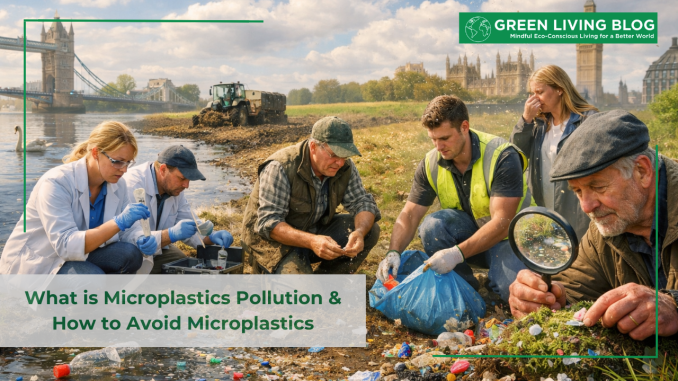
What Is Microplastics Pollution?
Microplastic pollution is the widespread contamination of the environment by tiny plastic particles (smaller than 5mm) which are created when larger plastic waste breaks down.
These particles can also be directly released from products like synthetic textiles, car tyres, and personal care items.
In the UK, microplastics now pollute soils, rivers, food, and even the air we breathe, with new evidence showing the problem is escalating and poorly regulated. (Source: UK Government)
Where Do Microplastics Come From in the UK?
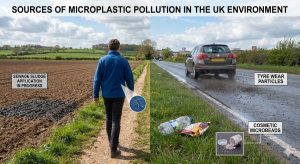
Most UK microplastic pollution comes from day-to-day sources:
- Synthetic clothing
- Tyre wear (tiny particles worn off vehicle tyres)
- Sewage sludge (treated human waste, spread on UK fields as fertiliser)
- Breakdown of packaging and litter
- Cosmetic microbeads (which are now banned, but were historically a source)
The UK currently regulates only a small proportion of microplastic sources. The only main law is a ban on microbeads in cosmetics which covers less than 5% of the problem. (Source: House of Commons Library)
Key UK Microplastic Pollution Insights
Microplastic pollution is accelerating rapidly across the UK:
- Farmland using sewage sludge have seen a staggering 1,450% increase in microplastic levels within just four years and contamination persisted even after two decades (Source: James Hutton Institute)
- UK rivers, including the Thames and River Itchen, have been found to contain high levels of microfibres, tyre particles, and even fibreglass. (Source: University of Brighton)
- Microplastic particles are now detected in both outdoor and indoor air.
Notably, there is no UK national plan or legal target for reducing microplastic emissions. (Source: University of Portsmouth)
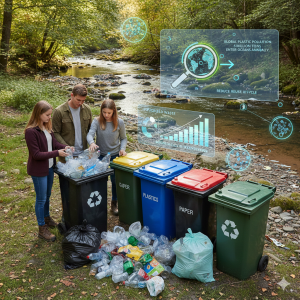
Scale of the Microplastics Pollution Problem
- UK households throw away about 1.7 billion pieces of plastic packaging each week. (Source: Surfers Against Sewage)
- Moss samples from across the UK show widespread contamination, with an average of 4.5 microplastic particles (over 25μm) per gram, peaking at nearly 25 particles/g in some areas. (Source: DEFRA)
- Microplastic concentrations in Thames estuary sediments average 170.8 particles per kilogram. (Source: ScienceDirect)
- An estimated 80% of UK marine plastic pollution originates from land-based sources. (Source: University of Brighton)
UK Public Opinion, Policy and Scientific Response
Public concern about microplastic pollution is rising.
More than 71% of respondents in a 2024 survey wanted stricter regulation of microplastic sources such as sewage sludge, textiles, and tyres. (Source: The WI)
While the UK has banned microbeads in cosmetics, it lags behind the EU and US in regulating other sources like textiles and tyres.
Leading UK universities (Brighton, Portsmouth, Plymouth Marine Laboratory) and NGOs (Greenpeace, WWF, Surfers Against Sewage) are calling for:
- Regulated limits and monitoring of microplastics in water, soil, and air
- Industry standards for textiles, tyres, and sewage treatment
- Real-time public data and more funding for innovative removal technologies
Note: Want to know what you can actually do about this growing problem? Explore our practical tips to reduce microplastic pollution at home and in your community.
If you have new UK data, community projects, or green tech tackling microplastic pollution, get in touch to share your story.
Disclaimer: All the information provided was correct at the time of publication (September 2025) and was collected with the help of accredited tools and AI.

Author Profile

- Always on the hunt for the latest green living news, tips and stories, proudly sharing them with readers all around the world to make this planet a better place.
Latest entries
 Green Home GuidesFebruary 27, 2026How Weather Measuring Tools Can Help Create Thriving Biodiverse Outdoor Spaces
- Green News ReleasesFebruary 14, 2026Algae Dynamic Biotech Parses 45Z Credit Rules
- DictionaryJanuary 19, 2026What is Microplastics Pollution & How to Avoid Microplastics
- Green Expert GuidesJanuary 17, 2026Could going flight-free be the best decision you make this year?



Leave a Reply
You must be logged in to post a comment.