
In the modern enterprise, data is both your most valuable asset and your greatest liability.
While cybersecurity teams spend millions fortifying digital perimeters against hackers, a massive physical security gap often remains: the “retired” hardware sitting in your storage room.
When a hard drive reaches its end of life, simply erasing the files isn’t enough to guarantee they won’t resurface.
For organizations that handle sensitive financial, medical, or proprietary information, secure hard drive shredding is the gold standard for risk mitigation.
The Myth of Digital Deletion

Many IT managers still believe that a “factory reset” or a standard disk format is sufficient. In reality, these processes often only remove the “table of contents,” leaving the actual data blocks intact and recoverable with widely available forensic software. Even “degaussing” (using magnets to disrupt the data) is becoming less effective as the industry shifts toward Solid State Drives (SSDs), which are unaffected by magnetic fields.
Physical destruction is the only method that provides 100% certainty. By reducing a drive to tiny fragments, the data is not just hidden; it physically ceases to exist.
How the Shredding Process Works
When you opt for professional destruction, the process is industrialized and highly regulated. Here is what typically happens:
- Serialized Tracking: Every drive is scanned by its serial number before entering the shredder, creating a digital paper trail.
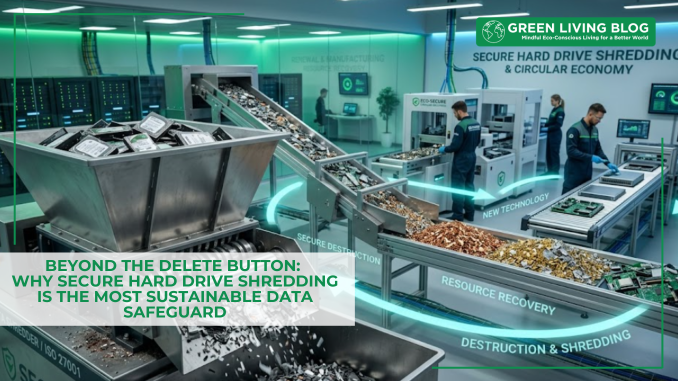
- Industrial Shredding: The drives are fed into a heavy-duty shredder that uses massive torque to grind metal, glass, and silicon into small, unrecognizable bits.
- Certificate of Destruction: Once the process is complete, you receive a legal document certifying that the media was destroyed according to industry standards. This is your “get out of jail free” card during an audit.
Integrating Destruction into your ITAD Strategy
Secure destruction doesn’t happen in a vacuum. It is a critical component of a broader ITAD (IT Asset Disposition) framework. A professional disposition strategy ensures that your hardware is managed from the moment it leaves the desk to the moment it is recycled.
By incorporating physical shredding into your asset retirement plan, you address the “Chain of Custody” requirements of regulations like GDPR, HIPAA, and SOX. You ensure that no drive ever leaves your control in a readable state.
Sustainability: From Shreds to Resources
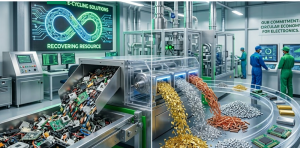
One of the common misconceptions about shredding is that it is wasteful. In a modern circular economy, the “shredder residue” (the pile of crushed metal and plastic) is not sent to a landfill. Instead, it is sent to specialized separation facilities where precious metals—such as gold, silver, palladium, and rare earth magnets—are extracted. These materials are then refined and returned to the manufacturing loop to create the next generation of technology.
Conclusion
In the world of information security, “good enough” is a dangerous mindset. Whether you are decommissioning a single laptop or an entire data centre, physical destruction offers a level of peace of mind that software simply cannot match. It is the final, irreversible step in protecting your company’s reputation and your customers’ privacy.
Is your data truly gone, or is it just waiting for someone to find it?

Author Profile

- Passionate content creator, contributor, freelance writer and content marketing allrounder.
Latest entries
 EnvironmentJune 8, 2026The UK’s Most Sustainable Building Materials Ranked
- Green Expert GuidesMay 4, 2026Beyond the Delete Button: Why Secure Hard Drive Shredding is the most Sustainable Data Safeguard
- Green Expert GuidesMarch 28, 2026The Environmental Cost of IT Hardware — Why Server Recycling Matters
- DictionaryFebruary 26, 2026Geothermal Plants – The Solution to Lower Carbon Energy?



Leave a Reply
You must be logged in to post a comment.