
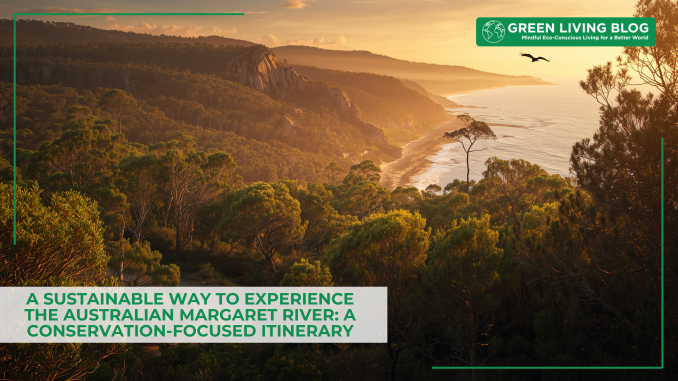
You come to Margaret River with a version of the place already in your head. A loop of cellar doors. A beach with some world-class surfing, if the wind drops. It works. Most people don’t need much more than that.
But this region you’re moving through sits snugly inside the Southwest Australia biodiversity hotspot, one of the most biologically unique environments and striking landscapes on the planet. Thousands of plant species found nowhere else, layered ecosystems, and a disproportionate concentration of rare and critically threatened wildlife contained within a relatively small corner of the world.
Much of it sits quietly amongst the bush, just behind the first line of marri trees, in the stretches of forest you pass between the more obvious tourist stops.
And once you start to notice it, the place begins to shift. What feels like a relaxed stretch between stops takes on more meaning, what looks untouched starts to reveal signs of pressure, and the landscape stops being a backdrop and becomes something you’re moving through more consciously.
So, instead of building a day around the usual circuit, there’s another way to approach it. One that leans into what makes this region distinct. A day shaped by places that reveal how the landscape actually functions, where it’s under pressure, and what’s being done to protect it.
You trade a few of the overt tourist traps for experiences that bring you closer to the land itself, wildlife rehabilitation, native bushland, community-led conservation, guided experiences that start to connect the dots.
By the end of it, you’re not just moving between destinations. You’re moving through a system, and this place stays with you differently because of it.
One-Day Snapshot
11:00 AM, Capes Raptor Centre
12:30 PM, Wadandi Track
2:00 PM, Margaret River Discovery Co.
4:30 PM, Lake Cave
5:30 PM, Passel Estate
11:00 AM: Capes Raptor Centre – Seeing the Impact Up Close
You turn off onto a quieter stretch, where the speed limit lifts, but you instinctively ease off anyway, watching for kangaroos known to make last-minute dashes across the bitumen, a common cause of accidents on these roads each year.
The light breaks differently through the canopy here, the trees leaning in and almost closing over the road, forming a shifting green tunnel that filters the sky above you. It feels like you’ve left the main flow behind, even though you’re only a few minutes out of the gentle buzz of this slower-paced Australian country town.
Then you start to hear them, a low rustle, a sudden wingbeat, something moving above you before you see it.
Like the many birds of prey that call this place home, the Capes Raptor Centre in Margaret River doesn’t announce itself loudly as it emerges from the bush it sits within, fitting into the landscape more than standing apart from it. This is where the day shifts from observation to something more immediate.
Most of the birds here weren’t meant to end up here at all. They’ve come in through the kinds of things that barely register when you’re moving through the region, a car on a quiet road, clearing that pushes habitat further back, small changes that bring wildlife closer to people, and most significantly through secondary poisoning, where second-generation rodent baits move up the food chain, passing from mice and rats into the birds that hunt them.
You’re standing a few metres from birds that should be covering vast distances, now grounded because of small, cumulative decisions made elsewhere.
A wedge-tailed eagle, affectionately named Mr. (Amazing) Grace, shifts on his perch, his size more confronting up close than you expect. He was found injured and blind in Meekatharra, further north in Western Australia, a long way from where you’re standing now.
Not everything here is a result of something going wrong. Some of the centre’s most recognisable birds were born in captivity and raised on site, now playing a different role as ambassadors, giving visitors a chance to see these aerial predators up close while helping explain just how critical they are to the ecosystem around them.
A barn owl named Alby, white as snow, turns his head 270 degrees just to catch your movement as you stand beside him for a photo. A team of brahminy kites take to the air in bursts of controlled chaos, performing aerial acrobatics before divebombing between the trees that thickly populate the centre, snatching pieces of raw meat thrown brazenly into the air and eating their prize mid-flight without ever breaking rhythm.
As a not-for-profit, the centre channels proceeds from entry and experiences directly back into wildlife rehabilitation and broader conservation efforts across the region, turning each visit into a small contribution toward keeping these species in the landscape.
If you time it right, you’ll catch one of the daily demonstrations. It’s part presentation, part interaction, with the team walking you through what you’re seeing while the birds move overhead.
Before you leave, take a slower walk through the bushland that surrounds the centre. A narrow trail winds quietly through the trees, opening out to enclosures set back from the path, each one holding a different species, spaced out enough that it feels like you’re discovering them rather than being led to them.
It’s quieter out here, just the sound of leaves shifting, the occasional call overhead, and the feeling that the bush has settled back into itself once you step away from the main clearing.
It’s the moment the place shifts again, not just from impact, but to understanding what’s still working, and what’s worth protecting.
12:30 PM: Wadandi Track – Walking Through Living Country
You leave the centre and ease back onto the road, but the way you’re looking at things has shifted slightly. What felt like background on the drive in now starts to pull your attention.
A few minutes on, you turn off again, this time onto a narrow access point into the Wadandi Track. There’s no grand entrance, no signage pulling you in, just a break in the bush and a path that disappears into it.
The track stretches for more than 100 kilometres, following the old Busselton to Flinders Bay railway line that once carried timber, primarily jarrah, out of the region, some of it ending up as far away as the cobblestone streets of London, where it can still be found underfoot today.
The name itself comes from the Wadandi (Saltwater) People, the traditional custodians of this part of the southwest, whose country stretches along the coast from Busselton down through Margaret River and Augusta. This is Wadandi Country, and the track moves quietly through it.
What was once an industrial route and before that walking trails of the Wadandi people has long since softened back into the landscape, returning to its original function, now used by hikers, cyclists, and locals out for a quick walk with the dog.
You step out, and almost immediately the air changes, cooler, still, carrying that faint mix of damp earth and eucalyptus.
You start walking.
It’s quiet in a way that feels rare. You can spend half an hour out here and not pass another person, just the soft crunch underfoot and the occasional flicker of movement in the trees.
Every now and then, you spot them, small flashes of blue and green on the ground, feathers dropped by the Australian Ringneck parrots that move through this stretch of bush, known locally as Twenty-Eights for the distinct sound of their call echoing through the trees.
If you’re here in winter, the ground tells a different story again, fungi pushing up through the leaf litter in all shapes and colours, delicate, strange, almost out of place if you didn’t know better.
It’s the kind of detail you only notice when you slow down.
And then, amongst all of that, something else starts to appear.
White…
Scattered at first, then gathering in pockets that stop you in your tracks.
Arum lilies.
They rise clean and bright from the darker forest floor, almost luminous against the greens and browns around them. In certain light, they look carefully placed, like something designed rather than grown, entire sections of bush softened by them, transformed into something almost serene.
It’s striking. Unexpected. Beautiful in a way that feels too deliberate to question at first.
Until you do.
They don’t belong here.
They spread quickly, outcompeting native species and slowly strangling the local bush as they take hold, reshaping the forest floor in ways that ripple outward through the ecosystem.
What looks like a seasonal bloom is actually a quiet takeover. Once you see it, you start to notice just how far it’s reached.
Each year, locals come together as part of the Arum Lily Blitz, a coordinated, community-led effort to remove the spread of these invasive plants across the region. Led by Nature Conservation Margaret River Region, it brings together hundreds of people, landowners, and local businesses tackling infestations across private properties, reserves, and roadside corridors.
It’s practical, hands-on, and necessary.
Because what looks like isolated pockets along a walking track is part of something much larger moving through the landscape.
Here, it’s not left to chance, it’s managed collectively.
And like before, your experience of Margaret River shifts. You’re not just walking through the landscape, you’re starting to read it.
2:00 PM: Margaret River Discovery Co. – Understanding the System
By this point in the day, the landscape has started to feel different. You’re noticing things you wouldn’t have picked up on a few hours earlier, small changes in the bush, patterns in how the forest opens and closes, the way certain areas feel denser or more fragile than others.
To make sense of it, you head further inland with Margaret River Discovery Co., leaving the main roads behind and moving into parts of the region most visitors never see. The bitumen gives way to pale orange gravel, the bush thickens, and the distance from the usual Margaret River loop becomes more apparent with every turn.
This is one way to experience it properly.
You might start the afternoon in a small group, no more than half a dozen people, easing into a quiet stretch of the Margaret River by canoe. It’s not rushed or technical, just a slow drift downstream, close enough to the water to notice how clear it is, how the banks change, how life moves along its edges.
From there, the afternoon opens up. A quick stop by the coast for coffee, then further inland again, tasting local honey and spotting marron (small freshwater crayfish) in the shallows of another river system.
By the time you stop for afternoon tea, it feels like you’ve earned it, set somewhere picturesque with local produce laid out, less about the stop itself and more about taking a moment within the landscape you’ve been moving through.
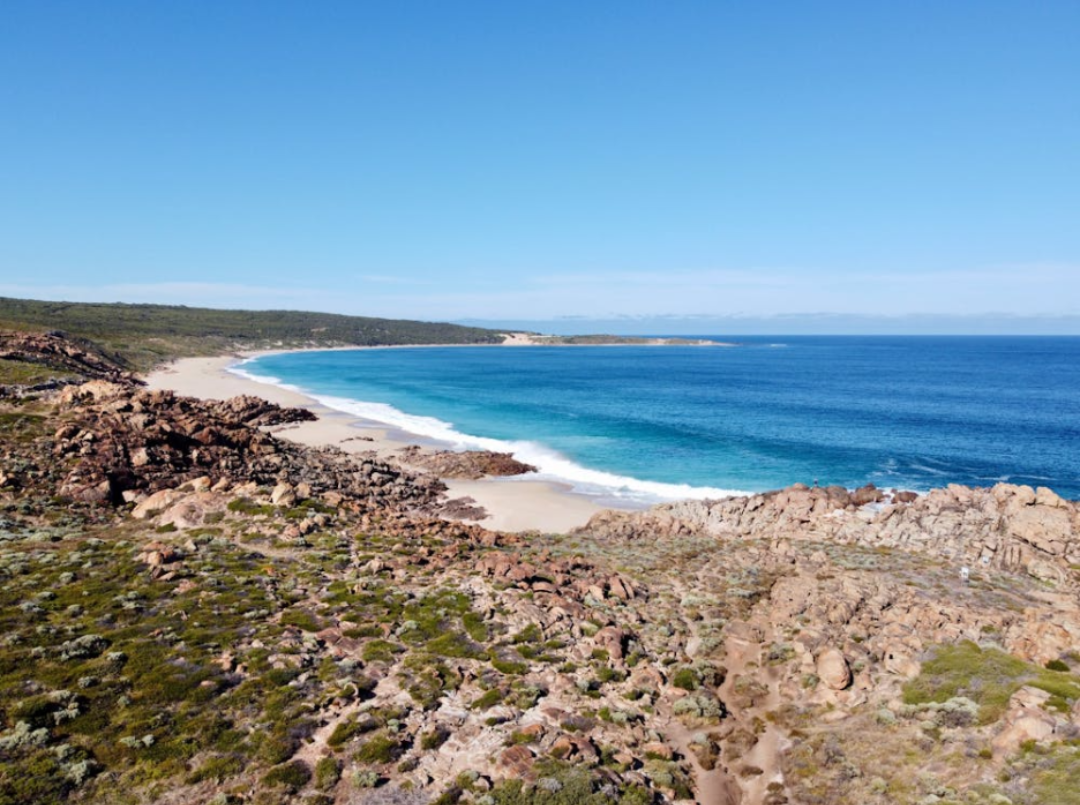
The afternoon shifts again. A short 4WD track takes you out toward the coast, connecting you to sections of the 130km long Cape to Cape Track that most visitors never reach, opening up views that feel a long way removed from the usual lookouts.
But the real value in all of it isn’t just where you go, it’s how it’s put together.
You’re not moving between disconnected stops, you’re being guided through a sequence that starts to make sense of the region as a whole. The rivers, the forest, the coastline, the agriculture, all of it tied together in a way that’s hard to piece together on your own.
By the time you find yourself standing back at the river or looking out over the coast, it’s no longer just scenery.
You start to understand how tightly everything is linked. The health of the river is tied to the forest that surrounds it, the forest stabilises soil and regulates water flow, and both are shaped over time by how the land is used. Small changes upstream don’t stay there, they move through the system, carried by water, soil, and time.
It reframes what you’ve already experienced. The injured birds from earlier in the day, the spread of invasive species along the track, even the subtle shifts in the bush you almost missed, they stop feeling like isolated issues and start to make sense as part of something larger.
Standing there, it becomes clear that this region isn’t just a collection of scenic stops. It’s a connected system, and one that only works as well as the balance between its parts.
4:30 PM: Lake Cave – Deep Time Beneath the Surface
From the river and forest, you head underground to Lake Cave, one of the most striking limestone cave systems that quietly riddle the region beneath your feet.
The descent is immediate, a staircase dropping you down through a narrow opening, the temperature cooling with each step as the light above fades. By the time you reach the base, the outside world feels further away than it should for somewhere so close.
Inside, everything slows down.
A still lake sits at the base of the chamber, perfectly reflecting the formations above it. Suspended over the water, a single delicate structure draws your eye, a formation that has taken thousands of years to grow, shaped one drop at a time.
Visitors are reminded not to touch the crystalline calcite deposits that catch the light and shimmer across the cave walls, as even the natural oils from a single touch can begin to degrade and damage them.
It doesn’t take much to understand how fragile it all is. These spaces form slowly, almost imperceptibly, and once damaged, they don’t recover within any meaningful human timeframe.
Some environments take thousands of years to form and seconds to damage.
After everything you’ve seen above ground, this part of the day reframes it again, not just as something living and connected, but as something ancient.
5:30 PM: Passel Estate – Sunset Tasting and Conservation in Practice
By the time you arrive at Passel Estate, a boutique winery in Margaret River, the day has already shifted how you see the region.
You follow the driveway through the vines as the light softens across the property.
For those planning to visit their Margaret River vineyard, this is where the experience becomes something more layered.
Passel Estate takes its name from a group of possums, and the property forms part of a sanctuary for the critically endangered Western Ringtail Possum, now reduced to small, fragmented populations across the southwest. The sanctuary was established following habitat loss and bushfire impacts.
Like their participation in the Arum Lily Blitz mentioned earlier, the estate plays an active role in broader conservation efforts across the region.
You’re here for a slower finish, a sunset tasting and picnic set within the landscape itself. It feels familiar but carries more weight after the day you’ve had.
You start to notice the details, remnant vegetation left intact, habitat corridors allowing wildlife to move through the property, the vineyard working with the land rather than replacing it.
If you choose to, you can walk the property and learn how the sanctuary operates and how it connects into wider conservation work across Margaret River.
It’s not presented as a feature. It’s just part of how the place functions, and after everything you’ve seen, that lands.
As the sun drops and the air cools, the day doesn’t end for a moment. It settles, and what stays with you isn’t just where you went, but how it all fits together.
That this place holds together because of the things happening quietly beneath it.
And once you’ve seen that, it’s hard to experience it any other way.

Author Profile

- Eco Warrior by day, Eco Blogger by night trying to get the eco balance right.
Latest entries
 Green Expert GuidesOctober 16, 2026Rechargeable Prefilled Vapes vs Refillable Kits: Which Format Fits Eco Vapers?
- EnvironmentSeptember 8, 2026The Greenest Home Is the One You Already Own
- EnvironmentJuly 31, 2026The Ultimate Guide to Building a Garden That Balances Beauty and Sustainability
- Green Home GuidesJuly 25, 2026Solar Safety: Why DC Isolation Matters More Than You Think



Leave a Reply
You must be logged in to post a comment.