
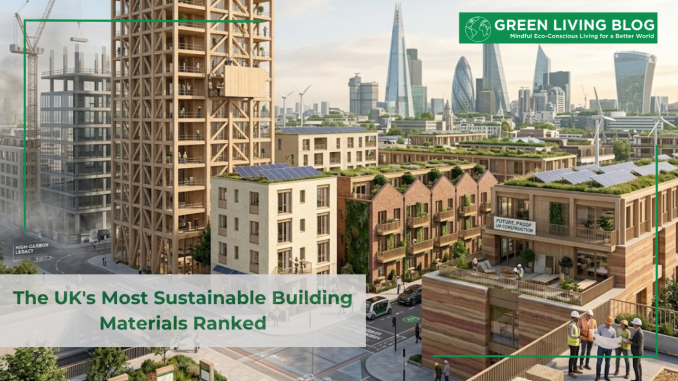
Discover the UK’s most sustainable building materials, ranked and analysed to help you make eco-friendly choices for your next construction project.
In this comprehensive guide, we’ll explore innovative and traditional materials that are transforming the way we build, from carbon-sequestering timber and hempcrete to reclaimed bricks and cutting-edge low-carbon concretes that are both solid and sustainable.
For new homes, retrofits, or commercial developments, understanding the environmental impact of your chosen products is crucial to meeting the UK’s ambitious net-zero goals for 2050.
Join us as we dive into the top sustainable options, practical selection tips, and emerging technologies shaping the future of green building in the UK.
Why Sustainable Building Materials Matter in the UK

Buildings and construction generate approximately 40% of global carbon dioxide emissions, with embodied carbon from material manufacturing and transport accounting for about 11% of global energy-related CO₂ emissions.
The cement industry is a primary driver, contributing roughly 8% of total global emissions. Here in the UK, ambitious targets like net zero by 2050 and a 68% emissions cut by 2030 are driving developers, housing associations, and self-builders to embrace eco-friendly materials like never before.
Embodied carbon covers everything from extraction to manufacturing and transportation, while operational carbon comes from heating, cooling, and energy use once the building is up. Traditional heavy hitters like concrete are energy intensive to produce, so slashing embodied carbon is a game-changer for reducing environmental damage.
Thankfully, powerful tools from UKGBC and RIBA are making it easier and harder to ignore the need for low-carbon choices in construction.
How We Ranked the UK’s Most Sustainable Building Materials
We ranked these building materials by:
- embodied carbon per m² or kg
- ability to sequester carbon
- durability, maintenance and end-of-life reuse
- recyclability, compostability or biodegradability
- health impacts, including VOCs and air quality
- UK availability, certification and Building Regulations fit
The BRE Green Guide ranks sustainable building materials based on lifecycle analyses, and we also considered FSC, PEFC, Grown in Britain and BES 6001. Solutions already viable in UK construction today rank above speculative alternatives.
The UK’s Most Sustainable Building Materials – Ranked Top 10
These are the most sustainable building materials for typical UK conditions, balancing performance, availability and low carbon footprint.
1. Cross Laminated Timber (CLT) and Mass Timber Systems
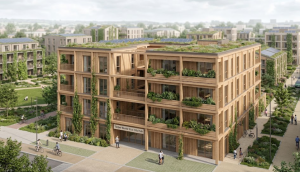
Cross laminated timber and glulam are leading structural sustainable materials for schools, offices and mid-rise housing. CLT layers timber at right angles, creating a strong alternative to concrete and steel.
Timber is a renewable resource that acts as a carbon sink. Products such as timber and hemp absorb CO₂ during growth, helping lock carbon away for decades. Engineered wood products are commonly FSC-certified for sustainable harvesting from sustainably managed forests.
Mass timber cuts waste through offsite manufacturing, stores carbon and supports energy efficient buildings. Global precedents show mass timber buildings can reach heights of 86.6 meters. In the UK, it suits modular schools, apartments, extensions and lightweight structural beams. Watch fire strategy, acoustics and moisture during construction.
According to the Cornish Frame Company, timber frame construction continues to grow in popularity thanks to its sustainability, excellent thermal performance and faster build times compared to many traditional building methods. The company has helped homeowners and developers across Cornwall create energy-efficient homes using modern timber frame systems that combine sustainability with long-term performance.
2. Hempcrete and Lime-Based Bio-Composite Systems
Hempcrete is a bio-composite used for insulation and walls, made from hemp shiv, lime, and water. It is a carbon-negative material that absorbs more CO₂ than it emits throughout its lifecycle. Hempcrete regulates moisture, enhances indoor comfort, and supports non-toxic, breathable walls. British hemp fibres are increasingly used in panels and cast walls. While it is not structural, requires skilled installation, and dries slowly in damp winters, hempcrete remains an environmentally friendly building material with significant sustainability benefits.
3. Straw Bale Construction
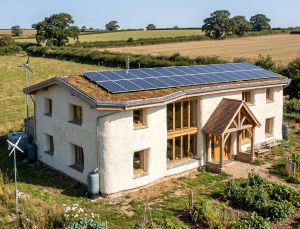
Straw bales are tightly packed agricultural by-products used as infill or load-bearing walls. Straw bales have three times the R-value of traditional insulation, helping create energy-efficient homes with a low operational carbon footprint. Materials that improve thermal insulation reduce the operational carbon footprint.
Straw locks in carbon, is a biodegradable material, and works well with lime render or timber cladding.
It is mainly for low-rise sustainable building projects and needs excellent detailing against rain, but modern systems are fire-resistant when compressed and rendered.
4. Reclaimed Brick and Stone
Reclaimed brick and stone from Victorian, Edwardian and industrial buildings reduce construction waste and preserve character. Reclaimed bricks significantly lower the carbon footprint of construction because they avoid new firing, quarrying and virgin materials.
These reclaimed products work for façades, wall coverings, landscaping and conservation projects.
They support circularity, reduce environmental degradation and are often the ideal material where traditional building materials must match existing fabric. Check frost resistance, strength and supply consistency.
5. British Hardwoods (Oak, Ash, Chestnut) and Softwoods
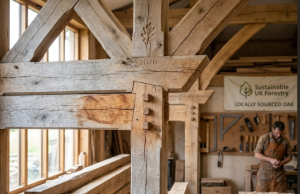
Local timber is central to sustainable construction. Oak, ash and chestnut are durable hardwoods for cladding, flooring and structural beams. Larch, Douglas fir and Sitka spruce are practical softwoods for frames and engineered products.
Short supply chains reduce transport carbon emissions and support the UK construction industry.
Reclaimed timber reduces the demand for new timber, while certified timber protects biodiversity.
Detailing is critical in wet UK conditions, especially for untreated external timber.
6. Low-Carbon Lime Mortar, Lime Plaster and Limecrete
Lime-based binders are traditional construction materials returning as a sustainable alternative to cement. They use lower kiln temperatures, carbonate over time and suit brick, stone, hempcrete and straw.
Lime plaster, mortar and limecrete are vapour-open, flexible and valuable in retrofits. They help older walls breathe, reducing damp risk. The trade-off is slower setting and the need for specialist labour.
7. Natural Insulation: Sheep’s Wool, Wood Fibre, Hemp and Cellulose
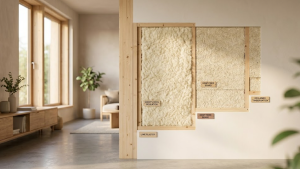
Natural insulation replaces synthetic alternatives such as petrochemical foams. Sheep’s wool insulation is fire-resistant and moisture-regulating. Wood fibre boards are recyclable and provide flexible insulation, acoustic comfort and low embodied energy.
Hemp batts, cellulose and cotton insulation are useful too. Cotton insulation is made from recycled blue jean scraps. These natural insulation products improve air quality and can be recycled or composted, though they may need more thickness than some alternative insulation systems.
8. Rammed Earth and Earth Blocks
Rammed earth is made by compressing soil and aggregates into walls. It uses local raw materials, often with little lime or cement, giving very low embodied carbon and excellent thermal mass.
Rammed earth suits eco-friendly homes, extensions and small public buildings. It needs generous eaves, plinths and specialist contractors in wetter UK regions. Cob has almost zero embodied carbon emissions, making earth construction a powerful niche option.
9. Recycled and Secondary Materials (Aggregates, Steel, Glass and Plastic)
Recycled materials are vital where bio-based options cannot do everything. Using recycled aggregates conserves natural resources and reduces landfill waste. Recycled steel can be used to build structural components with minimal waste, and recycled steel accounts for 40% of global steel production.
The use of reclaimed timber and recycled steel promotes circularity. Recycled glass reduces energy consumption compared to new glass production. Recycled plastic is used in roofing, flooring, and insulation, plus decking and fencing, though microplastics and end-of-life routes need scrutiny.
10. Innovative Low-Carbon Cements and Concretes (GGBS, Ferrock and Beyond)
Traditional concrete is still needed for foundations and infrastructure, so lower-carbon binders matter.
GGBS and fly ash can reduce cement content by 30–70% in some mixes.
Ferrock is a concrete substitute made from recycled steel dust and can cure by absorbing CO₂. These options reduce carbon emissions in heavy works, though standards, supply and engineer familiarity remain barriers.
Looking Ahead: The Future of Sustainable Building Materials in the UK
The building industry is moving towards lower-carbon products, circular design and healthier green buildings. Expect tighter embodied carbon rules, more offsite timber, more bio-based insulation and better digital LCA tools.
For construction businesses, the opportunity is practical: reduce waste, reduce risk and help create a more sustainable future. The sustainable future of UK construction depends on better specifications, stronger skills and better evidence.

Author Profile

- Passionate content creator, contributor, freelance writer and content marketing allrounder.
Latest entries
 Best practicesOctober 21, 2026Top 10 British Sustainable Beauty Brands To Know
- DictionaryOctober 1, 2026What Is Monomaterial Packaging? A Guide for UK Shoppers
- EnvironmentJune 8, 2026The UK’s Most Sustainable Building Materials Ranked
- Green Expert GuidesMay 4, 2026Beyond the Delete Button: Why Secure Hard Drive Shredding is the most Sustainable Data Safeguard


Leave a Reply
You must be logged in to post a comment.