
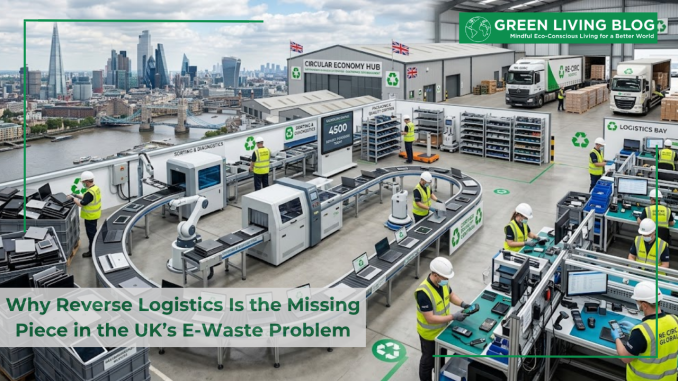
Industry research on UK e-waste puts the number at more than 25 unused electronic devices per household, from dead phones in kitchen drawers to laptops nobody’s turned on in years.
Multiply that across the country, and you get over 800 million devices sitting idle, doing nothing for anyone.
Most of us assume the fix is simple: take the old phone to a recycling point and the problem’s solved. But that’s not really where the story ends, or even where it gets interesting.
What happens to a device after it’s dropped off, returned to a retailer, or handed back at the end of a lease determines whether it gets a second life or just adds another line to a landfill statistic.
That gap between “recycled” and “actually reused” is where the UK’s e-waste crisis is quietly losing ground.
What Reverse Logistics Actually Means for Electronics
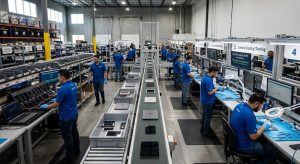
Recycling is the last stop. Reverse logistics is the whole journey that gets a device there, or somewhere much better.
When a phone, laptop, or router gets returned, whether through a retailer’s trade-in scheme, an insurance replacement, or a corporate lease ending, it enters a process that looks nothing like tossing something in a bin. First, it’s collected and logged. Then it’s inspected and graded: is the screen cracked, does the battery still hold a charge, is the data wiped securely?
From there, it splits into paths. Devices in decent shape get repaired and remarketed. Others get stripped for parts. What’s left goes to compliant recycling, where materials like copper, gold, and rare earth elements are recovered rather than buried.
Coverage of the smartphone supply chain from trade publications describes the same pipeline: upgrades, trade-ins, warranty returns, and insurance claims all feed into a structured inspection-and-redistribution process rather than a single point of disposal.
Specialised providers such as reverse logistics for electronics exist precisely because this process is complex enough that most retailers and manufacturers can’t run it well in-house. Sorting, testing, refurbishing, and remarketing devices at scale takes dedicated infrastructure, not a spare warehouse corner and good intentions.
The Scale of the UK’s E-Waste Gap
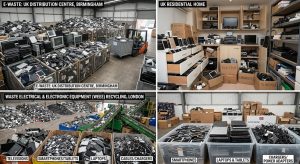
Here’s where the numbers get uncomfortable. The UK is the world’s second-largest producer of e-waste per capita, generating roughly 23.9 kg per person annually, according to DTP Group’s 2026 e-waste statistics report. That’s washing machines, kettles, phones, laptops, and everything with a plug or battery, all adding up faster than most people realise.
Globally, the picture isn’t much better. The UN’s Global E-Waste Monitor found that only 22.3% of the 62 million tonnes of e-waste generated worldwide in 2022 was documented as properly collected and recycled. That left around $62 billion in recoverable materials essentially unaccounted for, sitting in drawers, skips, and unmanaged waste streams instead of being turned back into something useful.
Part of the problem is regulatory. Only 81 countries currently have e-waste legislation or formal policies in place, according to the same Global E-Waste Monitor data. The UK does have WEEE regulations requiring producers and large retailers to fund and support proper collection, but regulation alone doesn’t move a device from a drawer to a refurbishment line.
That takes infrastructure. It also takes awareness, and if you want to understand why leaving devices unrecycled carries more than an environmental cost, our piece on why e-waste poses hidden dangers breaks down the toxic materials involved and the health risks of improper disposal.
From Cost Centre to Circular Asset
For a long time, businesses treated returned electronics as pure loss. A returned laptop was a write-off, not an asset. That thinking is changing, and fast.
The global reverse logistics market was valued at roughly $872.6 billion in 2025 and is projected to reach $936 billion in 2026, according to Global Market Insights’ 2026 report, on a trajectory toward $1.75 trillion by 2035. That’s not a niche industry anymore. It reflects a broader shift among manufacturers and retailers who’ve realised that a returned device isn’t dead weight, it’s recoverable value sitting on a shelf.
A phone with a cracked screen but a healthy battery and logic board is worth repairing, not binning. Even devices too damaged for resale often have components and materials worth recovering properly rather than being lost to landfill.
Businesses that build this thinking into their operations aren’t just doing the sustainable thing; they’re capturing money that used to evaporate the moment a customer hit “return.” Readers curious about where these repaired and graded devices end up can see the growing market for refurbished tech, which has become a genuine alternative to buying new for a lot of UK shoppers.
What Businesses and Consumers Can Do

If you run a business that handles returns, trade-ins, or end-of-lease equipment, the practical move is straightforward: partner with a reverse logistics provider that actually specialises in electronics, rather than treating returns as a logistics afterthought bolted onto a general warehouse operation.
The difference between a device being properly refurbished and quietly landfilled often comes down to whether the process was designed specifically for electronics, with secure data wiping, component-level testing, and compliant recycling pathways built in.
Consumers have a role too, even if it’s a smaller lever. Before binning an old device, check whether the manufacturer or retailer offers a take-back or trade-in scheme. Many do, and most people never ask. If a device is genuinely beyond use, our guide on properly recycling old devices at home walks through how to find certified collection points rather than defaulting to general household waste.
Neither move alone closes an 800-million-device gap. But infrastructure plus a bit of consumer effort moves the needle in a way that awareness campaigns by themselves never have.
Reverse Logistics can accelerate the UK’s E-Waste Recycling Efficiency

Recycling bins and awareness campaigns get most of the attention in e-waste conversations, but they’re not what determines whether a device gets a second life. That comes down to what happens after collection: whether there’s a system in place to inspect, repair, remarket, and responsibly recycle at scale. Reverse logistics is that system, and right now it’s underbuilt relative to the size of the problem.
The UK’s e-waste numbers aren’t going to improve through goodwill alone. They’ll improve when more businesses build proper reverse logistics into how they handle returns, and when regulation keeps pace with a market that’s already worth close to a trillion dollars globally. Both of those things are moving, just not quickly enough yet.

Author Profile

- Eco Warrior by day, Eco Blogger by night trying to get the eco balance right.
Latest entries
 Green Expert GuidesOctober 16, 2026Rechargeable Prefilled Vapes vs Refillable Kits: Which Format Fits Eco Vapers?
- EnvironmentSeptember 8, 2026The Greenest Home Is the One You Already Own
- EnvironmentJuly 31, 2026The Ultimate Guide to Building a Garden That Balances Beauty and Sustainability
- Green Home GuidesJuly 25, 2026Solar Safety: Why DC Isolation Matters More Than You Think




Leave a Reply
You must be logged in to post a comment.