
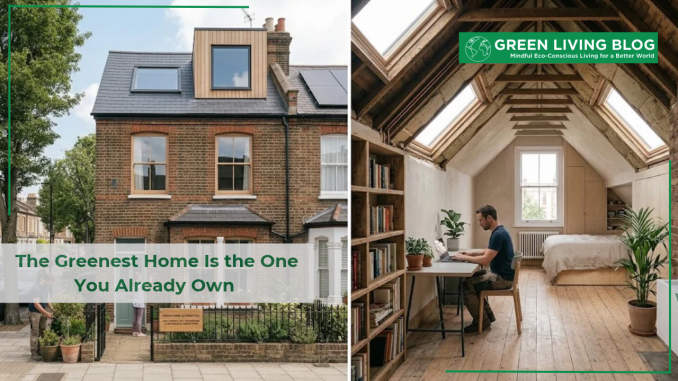
When we imagine a greener home, it’s tempting to picture something completely new: solar panels, immaculate insulation, high-performance glazing and the latest low-energy technology incorporated into a building designed from scratch.
But sustainable living isn’t always about starting again.
For millions of homeowners, one of the more environmentally responsible choices may be to make better use of the property they already have.
Renovating, retrofitting and adapting existing homes can reduce the need for new construction while allowing households to improve energy efficiency and gain the space they need.
And for homeowners who have simply run out of room, that makes the unused space above their heads particularly interesting.
Look Up Before You Move Out

Needing another bedroom, home office or bathroom often triggers one big question: should we move?
There is another option. Existing roof space may be capable of becoming functional living accommodation without requiring a family to leave an otherwise suitable home.
For example, homeowners exploring a loft conversion in London can potentially create an additional bedroom, office or master suite within their property’s existing footprint.
From an environmental perspective, the interesting part isn’t simply the additional room. It’s the idea of extracting more value and usefulness from a building that already exists.
Understanding Embodied Carbon
We often judge the environmental credentials of a home by how much energy it consumes once we’re living in it. That’s important, but it isn’t the complete picture.
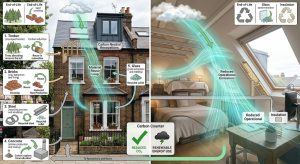
Buildings also have what is known as embodied carbon.
This broadly refers to emissions associated with materials and construction processes. Before a new home has been occupied, resources have already been extracted, processed, manufactured and transported, while machinery and construction processes have been required to assemble the building.
Concrete, steel, bricks, insulation, glass and timber all have environmental impacts associated with their production and use.
This is why sustainability conversations are increasingly looking beyond operational energy consumption and considering the whole life of a building.
Making Better Use of Existing Structures
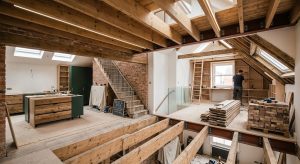
An existing house represents materials and resources that have already been invested.
Keeping that structure in use and adapting it to meet changing needs can therefore be an important part of a lower-carbon approach to housing.
A loft conversion still requires new materials, of course. Timber, steel, plasterboard, insulation, windows and finishes may all form part of a project, so it would be misleading to describe any substantial building work as impact-free.
The difference is that you’re working with an existing property rather than constructing an entirely new home for your household.
It’s the architectural equivalent of the principle behind so many sustainable choices: use what you have first.
Don’t Just Add Space: Improve It

Converting a loft also presents an opportunity to look at the performance of the roof itself.
An old, unused attic may have limited or ageing insulation. Once that area becomes habitable space, thermal performance, ventilation and comfort become central parts of the design.
Good insulation can help reduce unwanted heat loss during colder months while careful ventilation and glazing decisions can help create a comfortable space throughout the year.
Natural daylight is another consideration. Rooflights and well-positioned windows can reduce the need for artificial lighting during daylight hours while making the converted room a more enjoyable place to spend time.
Sustainability should therefore be considered at the design stage rather than treated as a collection of products to add at the end.
Think About Materials, Too
The choices made inside a conversion matter.
Where appropriate, homeowners can consider responsibly sourced timber, durable flooring, lower impact finishes and materials selected for longevity.
Durability is particularly important. A supposedly “green” material isn’t necessarily the best environmental choice if it needs replacing repeatedly.
The same principle applies to design trends. Choosing timeless, adaptable interiors may mean a room can evolve without requiring major refurbishment every few years.
Built-in storage beneath awkward eaves is a good example. Rather than leaving areas unusable, intelligent joinery can make almost every part of the new floor functional and reduce the perceived need for yet more space.
The Hidden Environmental Cost of Moving

Moving house also involves more than the new property itself.
There may be renovation work at the new home, discarded furniture that doesn’t fit the new rooms, new flooring, decorating and replacement fixtures. The household itself needs to be transported, while a longer commute or changed lifestyle could alter its environmental footprint for years afterwards.
Of course, sometimes moving is unavoidable. No amount of clever design can make every home suitable for every family.
But when the main motivation is simply a shortage of usable floor space, it is worth investigating what the existing property could become before assuming relocation is the only solution.
A More Sustainable Definition of a Dream Home
Perhaps we need to rethink what makes a home environmentally aspirational.
It doesn’t necessarily need to be newly built or packed with visible green technology. Sometimes sustainability is quieter: retaining an existing building, upgrading its fabric and making neglected areas useful again.
The loft full of forgotten boxes could become a bedroom. An underused corner could become an office. Improved insulation could make the new space more comfortable and efficient.
The result is a home capable of supporting its occupants for longer.
Because the greener house isn’t always waiting for you somewhere else. Sometimes, with thoughtful adaptation, it’s the one you’re already living in.

Author Profile

- Eco Warrior by day, Eco Blogger by night trying to get the eco balance right.
Latest entries
 Green Expert GuidesOctober 16, 2026Rechargeable Prefilled Vapes vs Refillable Kits: Which Format Fits Eco Vapers?
- EnvironmentSeptember 8, 2026The Greenest Home Is the One You Already Own
- EnvironmentJuly 31, 2026The Ultimate Guide to Building a Garden That Balances Beauty and Sustainability
- Green Home GuidesJuly 25, 2026Solar Safety: Why DC Isolation Matters More Than You Think


Leave a Reply
You must be logged in to post a comment.