

Losing your security deposit, in whole or in part, is never good, but luckily there is a way to prevent it and even leave on good terms with your landlord.
Deposit deductions are common, and London’s rental market is no exception. The cleaning expectations themselves can vary slightly depending on what’s written in the tenancy agreement.
This guide will show you where most deductions come from, what a thorough and sustainable cleaning should cover, and how best to protect yourself if a dispute arises.
Why Deposit Deductions Happen After A Tenancy Ends
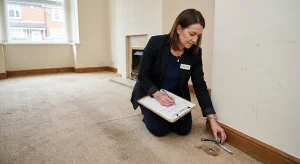
Most disputes trace back to one of two things: genuine damage beyond fair wear and tear, or a cleaning standard that falls short of what the tenancy agreement specifies.
The former covers gradual, everyday deterioration, such as slightly faded curtains or worn carpet in a high-traffic hallway, and landlords generally can’t deduct for this.
A cleaning deduction works differently. For example, if the tenancy agreement specifies that the property must be returned to a professional standard and the final clean falls short of that standard, a deduction becomes harder to challenge.
Deposit protection schemes handle disputes the same way, weighing evidence from both sides against the original check-in inventory.
Timing matters too. A dispute raised weeks after moving out, without photographic evidence from the actual handover date, is much harder to argue either way convincingly.
The check-in inventory carries more weight in these disputes than most tenants expect.
A detailed inventory with dated photos from move-in day sets the baseline against which everything else gets measured, so it’s worth reviewing that document again before the final clean, not just at the start of the tenancy.
The Areas Landlords And Agents Check Most Closely

Certain spots get checked closely at every end of tenancy inspection, since they’re the areas most likely to show neglect rather than normal use:
- Kitchen: oven interior, extractor fan filters, and behind large appliances
- Bathroom: limescale on tiles and taps, and mould in grout lines
- Windows: tracks, sills and any built-up condensation staining
- Carpets: stains needing professional steam cleaning rather than a quick vacuum
- Skirting boards and light switches: dust and fingerprint marks that build up unnoticed
These are the details that separate a pass from a dispute. They’re easy to overlook during a rushed final clean, but obvious to anyone doing a proper inspection.
What A Thorough and Sustainable End Of Tenancy Clean Covers
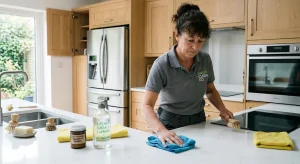
A genuine and eco-friendly end of tenancy clean goes well beyond a normal weekly tidy-up. Ovens need degreasing inside and out, including racks and the glass door, since built-up grease is one of the most commonly flagged issues and using eco-friendly products matters more than ever.
Carpets are best left to a professional end of tenancy cleaning service in Croydon, particularly in properties where pets have lived, since ordinary vacuuming won’t remove the embedded odours or stains.
Bathrooms need descaling as well as surface cleaning, since limescale builds up over months and won’t budge with a quick wipe.
Don’t overlook areas that are rarely cleaned during a normal tenancy, such as inside kitchen cupboards, behind the fridge, and the tops of wardrobes. These spots collect dust and grime that a final inspection is specifically looking for.
Bedrooms need attention too, even though they see less obvious wear than kitchens and bathrooms.
Wardrobe interiors, skirting boards, and any mattress left behind should be wiped down and aired out, since a lingering odour is exactly the kind of thing that shows up on a checkout report.
Documenting The Property Before You Hand Back The Keys

Photographs taken on move-out day, ideally timestamped and covering every room, are the single most useful piece of evidence you can have in a deposit dispute.
Compare them directly against the check-in inventory if one exists, since discrepancies between the two documents are exactly what adjudicators look at.
Keep receipts for any professional cleaning or carpet cleaning booked specifically for the move-out, since these demonstrate the standard achieved on a specific date.
A written record showing when the property was cleaned, by whom, and to what standard removes a lot of the ambiguity that fuels disputes.
If a landlord or agent flags an issue at check-out, it’s best to ask for photographic evidence of the specific problem before agreeing to any deduction from the deposit. Where a disagreement can’t be resolved directly, most deposit protection schemes offer a free adjudication service.
Adjudicators base their decision entirely on the evidence submitted, which is exactly why photos, receipts and the original inventory matter more than a verbal account of what the property looked like.
Common Mistakes That Lead To Deductions

Leaving the clean until the very last day is one of the most common mistakes, since it leaves no time to address anything missed or to book a professional cleaner if the DIY effort falls short.
Forgetting outdoor areas is another reason for disputes with your landlord. Balconies, gardens, and any allocated storage space are just as much a part of the tenancy as the flat itself, and neglecting them can result in a deduction even when the interior is spotless.
Assuming a normal domestic clean meets a professional standard clause is another frequent error. These two standards aren’t the same, and a tenancy agreement that specifies professional cleaning generally expects an invoice to prove it happened.
Weighing up the cost of a professional clean against a potential deduction is usually pretty simple once both figures are side by side. A deduction for a failed inspection, plus the hassle of disputing it, often outweighs the cost of booking it properly the first time.
Conclusion
Avoiding a deposit deduction comes down to matching the job to what the tenancy agreement actually requires, not just what looks tidy at a glance.
Whether you do that yourself or hire pro cleaners, following these standards to the letter will ensure you get your money back in full.
So, read the document carefully before you decide the best course of action. A little preparation here goes a long way toward getting the full deposit back and ensuring a successful, brand-new start!

Author Profile

- Passionate content creator, contributor, freelance writer and content marketing allrounder.
Latest entries
 EnvironmentNovember 11, 2026How to Avoid Deposit Deductions with Sustainable End of Tenancy Cleaning
- DictionaryOctober 1, 2026What Is Monomaterial Packaging? A Guide for UK Shoppers
- EnvironmentJune 8, 2026The UK’s Most Sustainable Building Materials Ranked
- Green Expert GuidesMay 4, 2026Beyond the Delete Button: Why Secure Hard Drive Shredding is the most Sustainable Data Safeguard




Leave a Reply
You must be logged in to post a comment.