
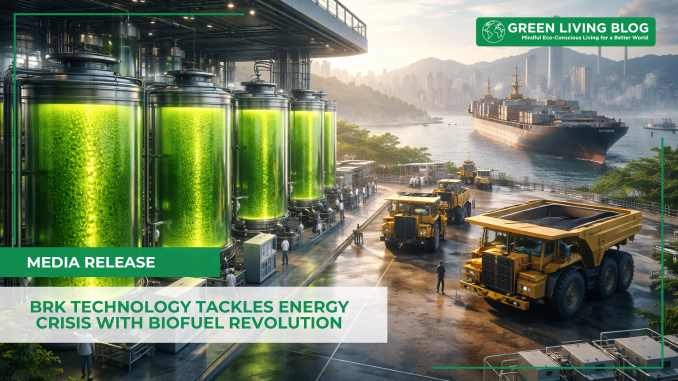
As heavy transport, marine and power operators tighten emissions accounting, the Hong Kong developer is moving engineered microalgae and pilot fuel data into a commercialisation pathway built around reliability, compliance and industrial scale.
As industrial operators move deeper into a more exacting emissions reporting cycle, and as fuel price volatility and supply security return to the risk register, Jin Wong, BRK Technology Co., Limited’s CEO, places the company’s current push squarely in that gap:
“Operators are asking for lower-carbon fuels that work with existing engines, existing maintenance cycles and real-world duty profiles, and that is where algae-based biofuel starts to become commercially relevant.”
At the centre of the programme is a microalgae platform built around engineered strains selected for higher lipid content, stable growth and compatibility with downstream refinement into drop-in renewable fuel. Rather than imply immediate market release, the company is advancing the work through pilot development, where fuel quality, feedstock resilience and process control can be tested against the needs of heavy transportation, marine, mining, construction, logistics and power generation.
For Mr. Wong:
“Microalgae give us a route to improve carbon performance and fuel practicality at the same time, which is critical for sectors that cannot accept interruptions.”
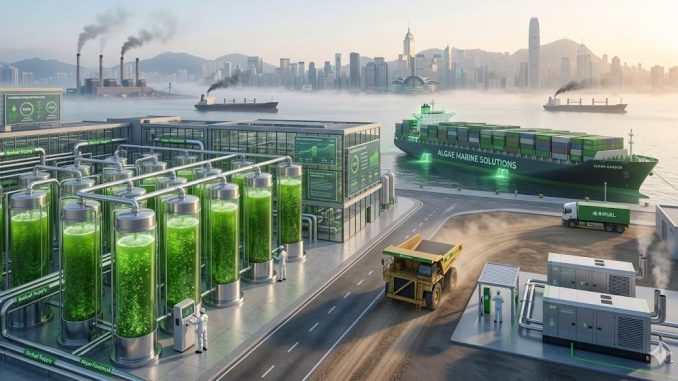 Because microalgae can be cultivated without relying on food crops, and can make use of suitable seawater, industrial carbon streams and selected wastewater inputs, the technical case also speaks to resource pressure beyond fuel supply. The company’s development pathway centres on contamination control, enclosed cultivation systems and refining steps intended to produce a fuel that can move through hard-worked industrial assets with minimal operational disruption, while supporting a closed-loop carbon cycle that stands up to lifecycle scrutiny rather than broad environmental marketing.
During the present pilot phase, the fuel pathway is being assessed against fossil reference fuels used in matched operating conditions, with the company targeting lifecycle greenhouse-gas intensity reductions in the 50% to 70% range for defined industrial applications. That framing matters because construction fleets, mining equipment, marine engines and distributed power units increasingly need verifiable reductions in greenhouse-gas intensity, not vague claims, if they are to satisfy procurement, reporting and compliance requirements over current contracting cycles.
That is also why BRK Technology is keeping its early programme deliberately focused. A limited group of industrial partners is helping shape technical validation, commercial frameworks and governance standards, with each trial designed to establish baseline fuel data, performance thresholds and independent verification that can later support broader contracting and more standardised procurement.
In Mr. Wong’s view:
“The first partnerships are not only about proving the fuel in the field, they are also about building the reporting discipline, ESG metrics and technical evidence that serious industrial customers expect.”
The structure is notable because it mirrors the kind of process discipline that institutional energy and infrastructure investors, long-horizon capital and specialist cleantech funds typically watch as industrial technologies move towards scale. Standardised technical data rooms, consistent performance reporting and audit-ready methods are becoming part of the company’s operating language, even as the business remains firmly in pilot and pre-commercial development with a narrow set of industrial collaborators.
For now, BRK Technology Co., Limited is presenting algae-based biofuel as an industrial solution in development, not a broad market launch. The immediate task is to show that a fuel derived from engineered microalgae can serve heavy machinery and transport systems with the reliability operators require, while lowering lifecycle emissions and giving partners a clearer path through future compliance and supply decisions.
As Mr. Wong puts it:
“If we can combine reliable performance, transparent carbon data and disciplined execution with a small group of partners, the route to scale becomes much more credible.”
About BRK Technology Co. Limited
BRK Technology Co., Limited turns algae into drop-in renewable fuels built for the toughest industrial and agricultural machinery. From strain cultivation through advanced refinement to global delivery, every stage of production is eco-certified and zero-waste. Based in Hong Kong, the company partners with operators worldwide to cut emissions while maintaining the performance and reliability heavy operations require.
Press contact: Calvin Lau, media@brktech.com | Website: https://brktech.com
-ends-

Author Profile

- Always on the hunt for the latest green living news, tips and stories, proudly sharing them with readers all around the world to make this planet a better place.
Latest entries
 DictionarySeptember 3, 2026What Is Biodiversity Net Gain (BNG) in the UK? A Guide to Nature-Positive Development
- DictionaryJuly 10, 2026What Is the UK Deposit Return Scheme (DRS) & Extended Producer Responsibility (EPR)?
- Green News ReleasesApril 22, 2026BRK Tech Reports EU Agriculture Commissioner Hansen Backs Biofuel Boost for Farmers
- Green News ReleasesApril 17, 2026BRK Technology Tackles Energy Crisis with Biofuel Revolution


Leave a Reply
You must be logged in to post a comment.