
Summary:
- According to the Ellen MacArthur Foundation Marine Plastics Overview, over 150 million tonnes of plastics currently pollute marine ecosystems, with household single-use packaging making up the single largest share of global plastic waste.
- Research from the European Environment Agency on Emerging Chemical Risks highlights that exposure to PFAS costs European healthcare systems between €52 billion and €84 billion annually due to long-term health complications like endocrine disruption and suppressed immune function.
- Making simple green lifestyle changes and choosing eco-friendly materials for a sustainable kitchen dramatically lowers a household’s carbon footprint while supporting broader national sustainability goals like reaching net zero emissions.
- Switching away from synthetic plastics and chemical coatings helps prevent plasticizer leaching into meals and stops thousands of microplastic fibers from entering municipal wastewater systems.
- Adopting durable, reusable kitchen tools is highly resource-efficient, and scaling these sustainable habits helps eliminate tons of single-use packaging waste from landfills every year.
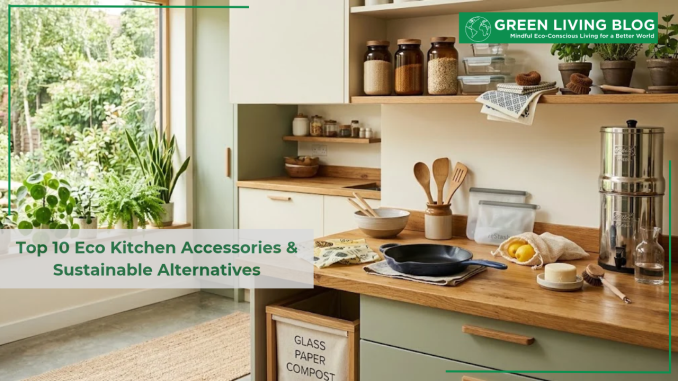
We have compiled a list (in no particular order) of 10 common kitchen accessories that contain plastics, synthetic polymers, or PFAS, along with research-backed, chemical-free alternatives to help you create a safer, zero-waste kitchen for your home and the environment.
1. Organic Beeswax Wraps (Alternative to Single-Use Plastic Cling Film)
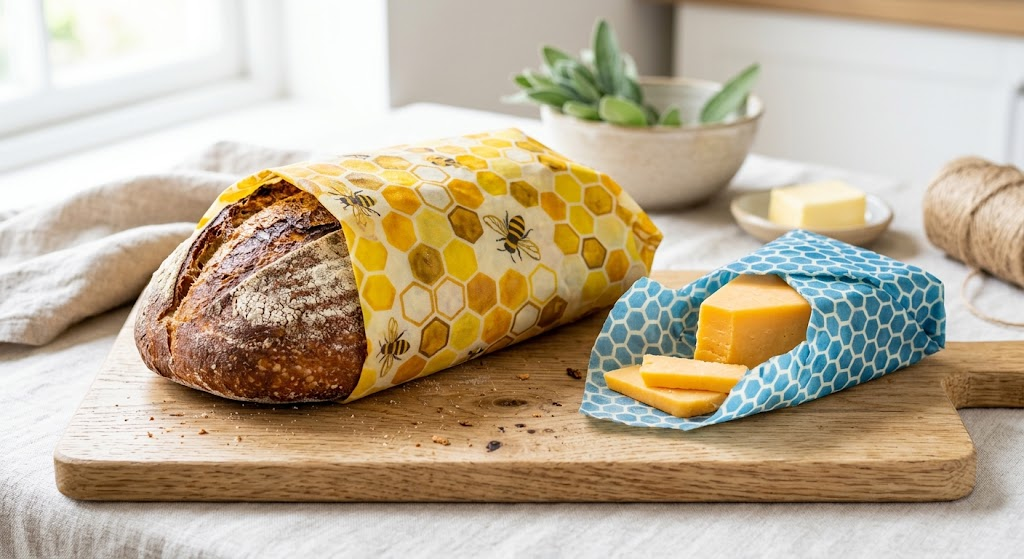
Single-use plastic cling film is made from PVC or low-density polyethylene (LDPE), which is notoriously difficult to recycle and often leaches plasticizers into fatty foods. Beeswax wraps—made from organic cotton infused with natural beeswax, jojoba oil, and tree resin—offer a breathable, self-sealing alternative.
- Research & Statistics: According to data published by Business Waste UK on Cling Film Disposal & Recycling, UK households alone throw away over 1.2 billion metres (745,000 miles) of single-use cling film every year—enough to wrap around the equator 30 times. Additionally, a peer-reviewed laboratory study published in the NCBI Journal on Antimicrobial Properties of Beeswax proved that beeswax exhibits natural antibacterial activity against common foodborne pathogens like Staphylococcus aureus.
- Environmental Impact: Reusable for up to 12 months with proper cold-water washing, replacing up to 100 metres of plastic wrap per sheet, and 100% home-compostable at end-of-life.
- Best For: Wrapping cheese, artisan bread, cut fruit, and covering leftovers.
2. FSC-Certified Bamboo Utensils (Alternative to Plastic Spatulas & Nylon Tools)
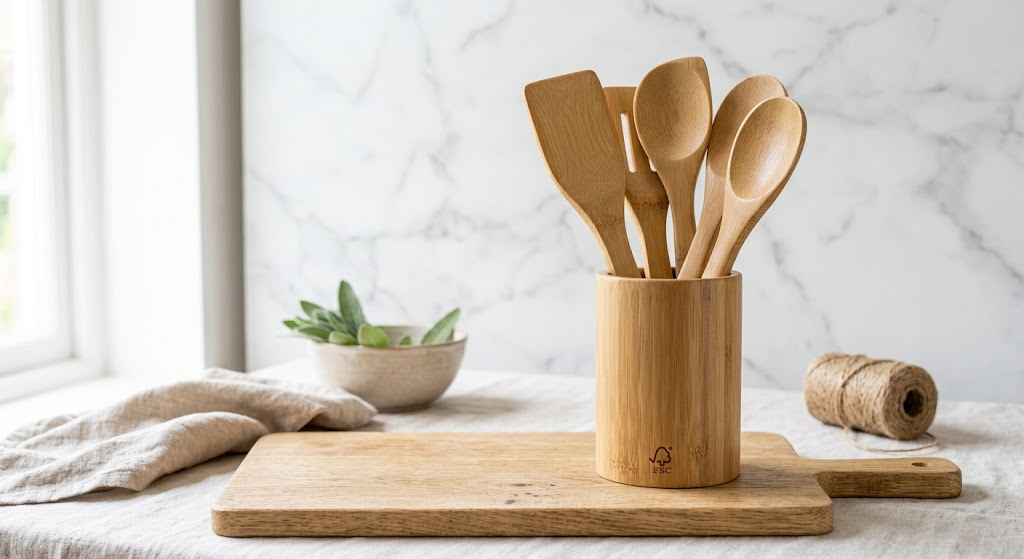
Plastic and nylon cooking utensils can degrade when exposed to heat, releasing oligomers and microplastics directly into meal preparations. FSC-certified bamboo utensils offer a heat-resistant, natural alternative that is completely free from synthetic binders.
- Research & Statistics: A risk assessment report published by the Food Packaging Forum on BfR Statement on Polyamide Oligomers revealed that heating nylon kitchen utensils above 70°C causes cyclic polyamide oligomers to migrate into food at levels up to 17.6 mg per person per day—drastically exceeding the safe toxicological threshold of 0.09 mg/day. Conversely, raw timber certified under the Global Organic Textile Standard Criteria Documentation ensures raw materials are harvested without requiring pesticides or synthetic fertilizers.
- Environmental Impact: 100% carbon-neutral during cultivation, heat-safe up to 230°C without melting, and fully biodegradable.
- Best For: Stir-frying, baking, and cooking on ceramic or cast-iron surfaces.
3. Borosilicate Glass & Food-Grade Stainless Steel Containers (Alternative to Plastic Tupperware)
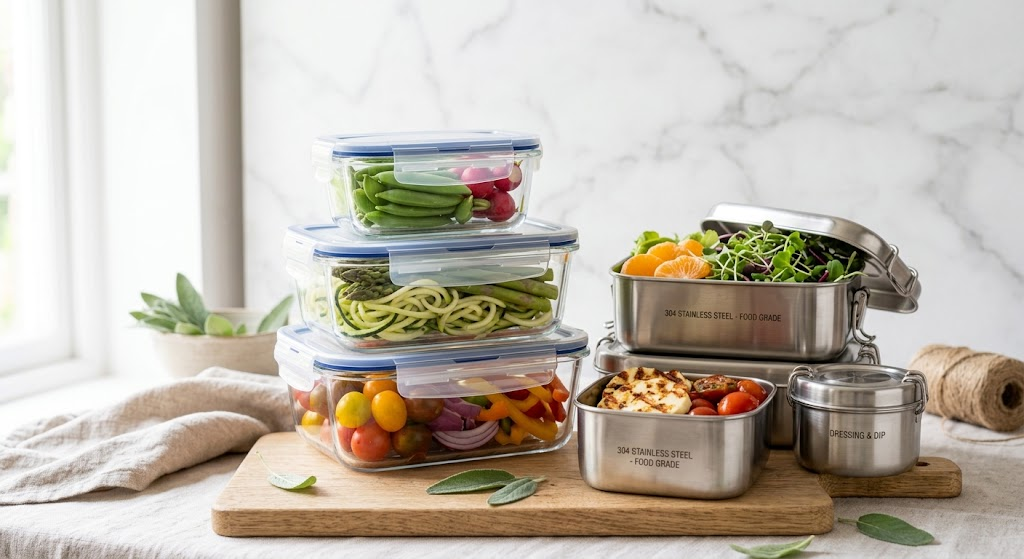
Conventional plastic food storage containers can degrade over time, absorb food odors, and leach Bisphenol A (BPA) or replacement phthalates into hot or acidic foods. High-borosilicate glass and 304 food-grade stainless steel containers provide non-porous, highly stable alternatives.
- Research & Statistics: A landmark 2023 study from the University of Nebraska-Lincoln, published in ACS Environmental Science & Technology / PubMed Study 37343248, discovered that microwaving food in standard polypropylene plastic containers for just 3 minutes releases up to 4.22 million microplastics and 2.11 billion nanoplastics per square centimetre of plastic surface into the meal. Switching to glass or steel helps eliminate a major source of microplastic pollution in home meal preparation.
- Environmental Impact: Infinitely recyclable without material degradation, preventing hundreds of plastic containers from entering landfills.
- Best For: Meal prepping, freezing soups, and safe microwave reheating.
4. Seasoned Cast Iron & Carbon Steel Pans (Alternative to PFAS / Teflon Non-Stick Pans)
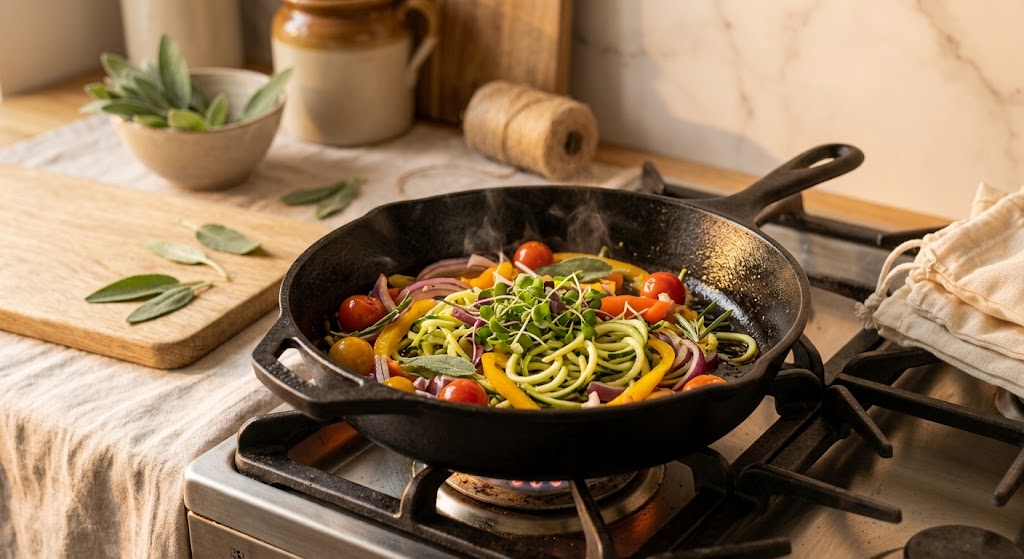
Traditional non-stick cookware utilizes polytetrafluoroethylene (PTFE) coatings, a class of PFAS. When overheated, PTFE breaks down, releasing toxic fumes known to cause polymer fume fever in humans and acute toxicity in domestic birds.
- Research & Statistics: Testing conducted by the Environmental Working Group Study on Canaries in the Kitchen demonstrated that conventional non-stick pans can reach toxic off-gassing temperatures of 240°C to 383°C (464°F to 721°F) in as little as 2 to 5 minutes on a standard stovetop burner, releasing up to six distinct toxic gases. Naturally seasoned cast iron provides non-stick performance through polymerized cooking oils rather than synthetic chemicals, offering one of the safest green alternatives to PFA products.
- Environmental Impact: Heirloom durability—a single cast-iron skillet can last over 100 years, entirely eliminating disposable pan replacement cycles.
- Best For: High-heat searing, baking, and daily stovetop cooking.
5. Compostable Coconut Fiber Scrub Brushes (Alternative to Synthetic Foam Sponges)
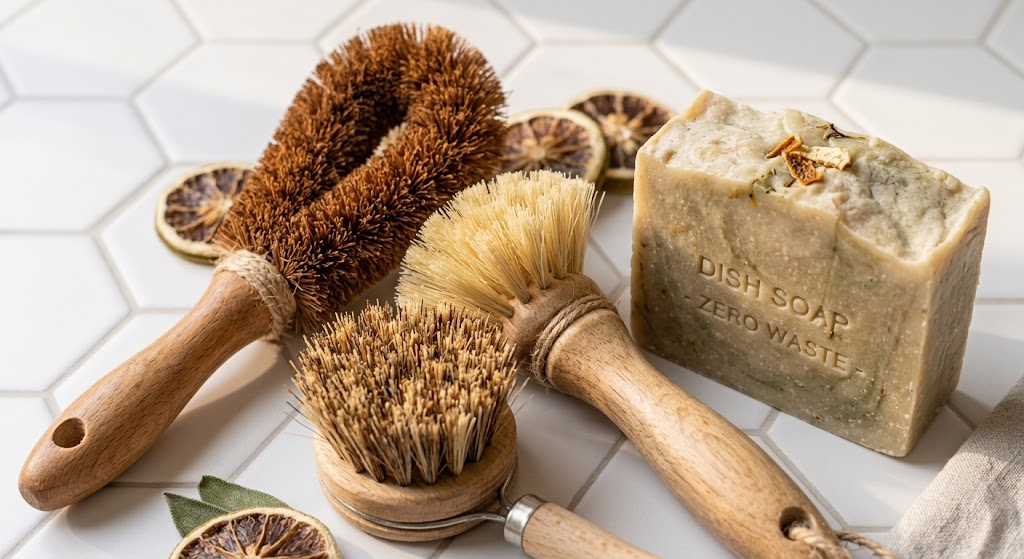
Standard yellow-and-green dish sponges are manufactured from polyurethane foam and polyester. With each dishwashing session, mechanical friction releases thousands of synthetic microfibers into municipal wastewater systems.
- Research & Statistics: Research reported by ACS ScienceDaily on Microplastic Shedding from Sponges estimates that everyday kitchen cleaning products shed trillions of microplastic fibers globally every month, with household cleaning contributing up to 13,000 microplastic particles per household daily to wastewater streams. Replacing synthetic foam with coconut coir or sisal fiber brushes directly addresses the growing microplastics pollution problem.
- Environmental Impact: 100% plastic-free, backyard-compostable within 3–6 months, and naturally resistant to odor-causing bacteria.
- Best For: Scrubbing baked-on grease from pots, pans, and root vegetables.
6. Platinum-Grade Silicone Storage Bags (Alternative to Disposable Zip Bags)
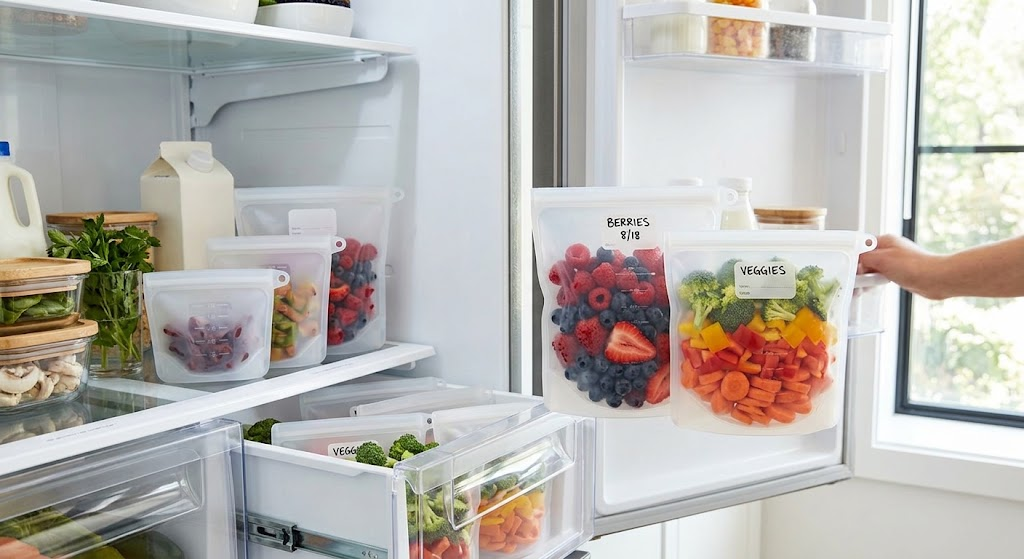
Disposable plastic zip bags are made from thin polyethylene that contributes significantly to soft-plastic environmental pollution. Food-grade platinum silicone pouches offer a flexible, temperature-stable alternative that endures thousands of uses.
- Research Backing: Safety guidelines published in the European Food Safety Authority Technical Guidance on Food Contact Materials confirm that platinum-cured silicone is non-reactive, heat-stable from -40°C to 230°C, and completely free from plasticizers, phthalates, and heavy metals. Incorporating these durable bags is a practical step for anyone looking into how to reduce kitchen waste.
- Environmental Impact: Reusable up to 3,000 times, replacing over 300 single-use plastic zip bags per year per household.
- Best For: Sous-vide cooking, freezing berries, storing liquids, and carrying snacks on the go.
7. Unbleached Organic Cotton Produce Bags (Alternative to Supermarket Plastic Bags)
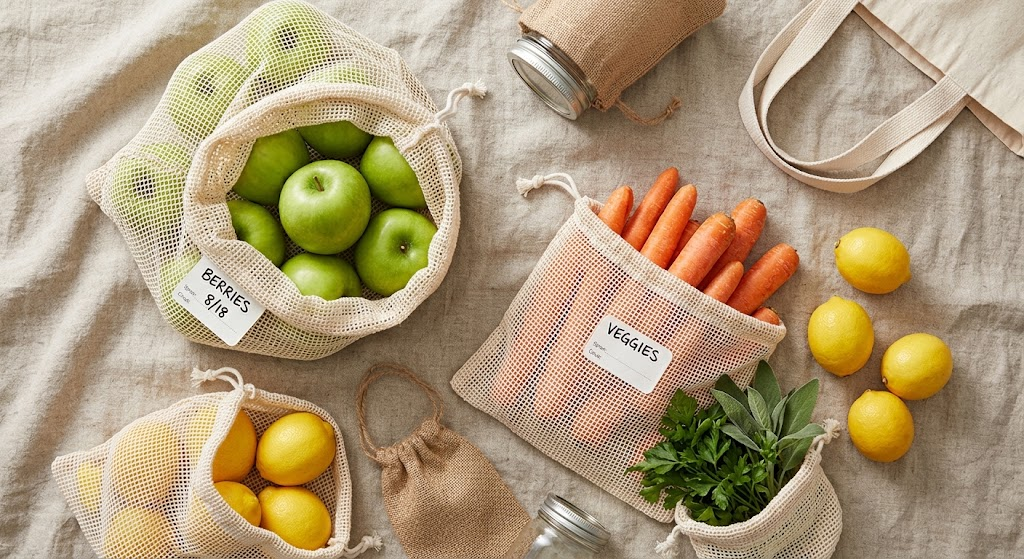
Thin plastic produce bags supplied in grocery stores are typically used for less than 30 minutes before disposal, taking up to 500 years to break down in landfills. Certified organic cotton mesh bags eliminate the need for single-use plastic during food shopping.
- Research & Statistics: According to textile life-cycle data from Textilcolor AG Overview on GOTS Environmental Standards, certified organic cotton farming requires zero synthetic pesticides or herbicides and produces drastically lower environmental runoff compared to conventional cotton. Choosing natural fibers is central to selecting eco-friendly materials for a sustainable kitchen.
- Environmental Impact: Washable, reusable for years, and 100% bio-based.
- Best For: Purchasing fresh fruits, vegetables, grains, and bakery items in bulk.
8. Solid Dish Soap Blocks (Alternative to Liquid Dish Soap in Plastic Bottles)
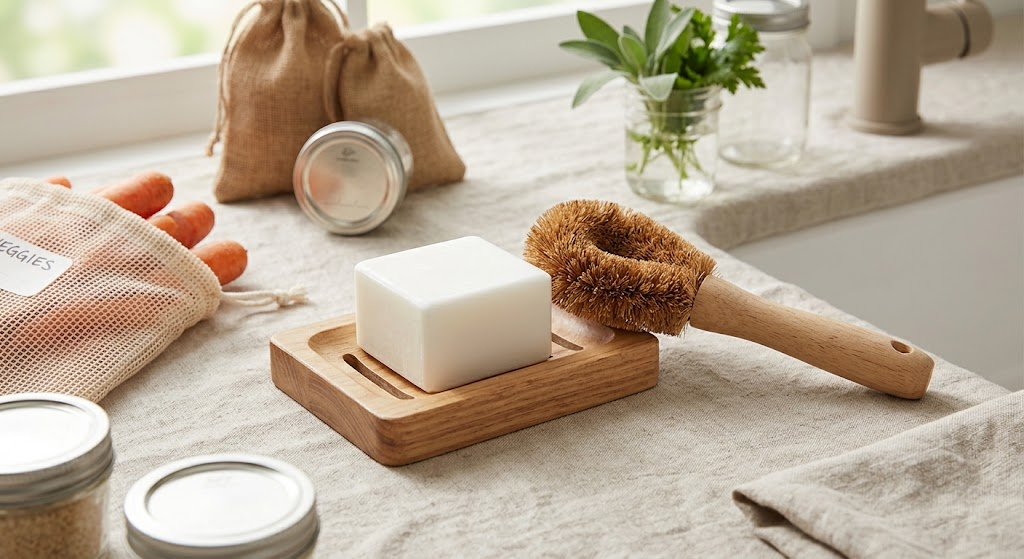
Liquid dishwashing soaps consist of up to 85% water packaged in single-use high-density polyethylene (HDPE) plastic bottles. Solid dish soap bars condense active cleaning surfactants into a waterless, zero-waste block.
- Research & Statistics: Industry analysis from the British Retail Consortium on WRAP Sustainable Packaging Initiatives highlights that over 520 million plastic cleaning bottles are consumed annually in the UK alone. Transitioning to concentrated solid soaps cuts out single-use HDPE bottles and lowers shipping emissions as part of a sustainable home waste management routine.
- Environmental Impact: Cuts household plastic bottle consumption to zero and lowers transport fuel carbon emissions due to compact volume.
- Best For: Direct brush scrubbing and heavy grease removal on dishes.
9. Stainless Steel & Ceramic Gravity Water Filters (Alternative to Plastic Filter Pitchers)
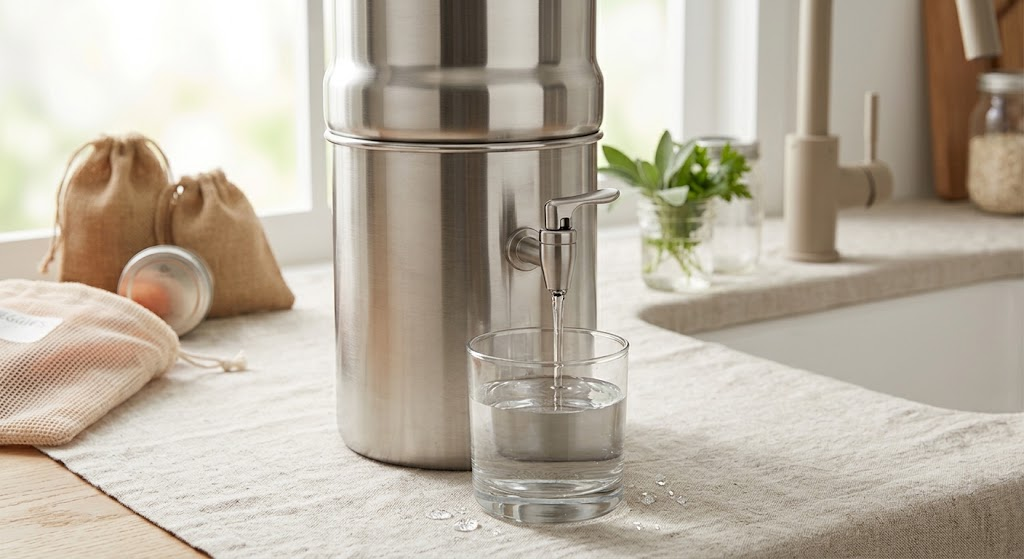
Most standard consumer water filter pitchers rely on disposable plastic cartridges contained inside clear polycarbonate or SAN plastic jugs, which can degrade over time. Countertop gravity systems made from 304 stainless steel or ceramic use natural filtration candles to purify tap water without plastic contact. To further reduce energy and resource footprint when preparing hot drinks, pair clean filtered water with eco-friendly home gadgets like rapid eco kettles.
- Research & Statistics: A peer-reviewed water purity investigation published in the MDPI Journal on Microplastics in Water Purification found that ceramic gravity filters reduced microplastic concentrations down to 0.49 particles/L, compared to 1.41 particles/L found in standard plastic water purifiers. Furthermore, high-grade ceramic filters meet international testing criteria for removing 99.99% of pathogenic bacteria and heavy metals.
- Environmental Impact: Eliminates plastic leaching and replaces up to 24 single-use plastic filter cartridges per year per household.
- Best For: Pure daily drinking water and plastic-free tea/coffee preparation.
10. Swedish Cellulose Dishcloths (Alternative to Single-Use Paper Towels)
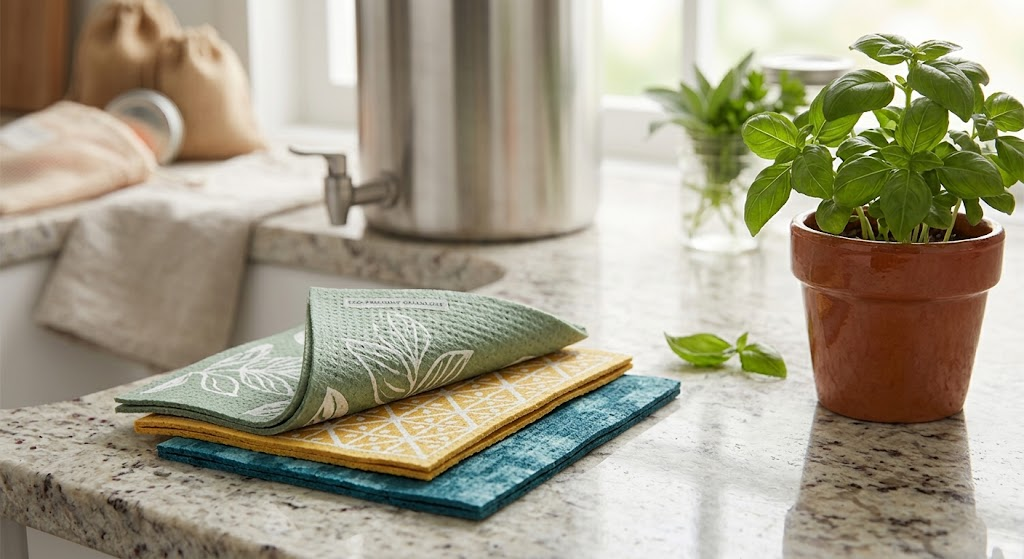
Paper towel production relies heavily on virgin timber deforestation and energy-intensive chlorine bleaching, generating substantial municipal landfill waste. Swedish dishcloths—crafted from 70% FSC wood cellulose and 30% organic cotton—absorb up to 20 times their weight in liquid.
- Research & Statistics: Municipal waste data published by RecycleCoach on Paper Towel Recycling Contamination & Alternatives reveals that over 3.8 million tons of tissue and paper towel waste are generated annually in the US alone. Evaluating sustainable paper product alternatives, such as examining eco-friendly tissue options for UK homes, demonstrates how bamboo and cellulose alternatives drastically reduce household deforestation impacts.
- Environmental Impact: Machine-washable up to 200 times and 100% home-compostable within 6 weeks in standard soil.
- Best For: Wiping down countertops, drying dishes, and polishing stainless steel surfaces.
Simple Steps for Building a Zero-Waste Kitchen
- Adopt the “Use-It-Up” Principle: Do not discard functional plastic items immediately. Use existing utensils and containers until they reach the end of their useful life before upgrading to sustainable materials.
- Look for Third-Party Certifications: Prioritize accessories backed by recognized standards such as FSC (sustainable wood/bamboo), GOTS (organic textiles), or OEKO-TEX (chemical safety).
- Choose Mono-Material Construction: Products made from a single natural material (like 100% bamboo or 100% cast iron) are much easier to recycle or compost than composite products glued together with synthetic adhesives.
- Practice Proper End-of-Life Disposal: Dispose of natural fiber brushes, cellulose cloths, and worn beeswax wraps in your organic garden compost or municipal green waste bin.
Making Smarter Choices for the Future
Choosing sustainable brands helps reduce waste, lower emissions, and support ethical businesses. By making informed choices, you can help create a greener future while enjoying quality products.
Know a sustainable brand we should feature? We’re always looking to discover innovative businesses making a real impact. If you have a recommendation, suggestion, or feedback, we’d love to hear from you. Get in touch and help us keep this guide up to date.
Frequently Asked Questions (FAQs)
1. Are organic beeswax wraps hygiene-safe and easy to clean?
Yes. Beeswax wraps have natural antibacterial properties. Clean them by hand-washing in cold water with mild dish soap and air-drying. Never use hot water, as heat melts the wax coating.
2. Why should I replace nylon or plastic spatula utensils with bamboo?
When heated above 70°C, synthetic plastic and nylon utensils can degrade, releasing microplastics and chemical oligomers directly into your food. FSC-certified bamboo is heat-resistant, non-toxic, and safe for non-stick cookware.
3. Is microwaving food in plastic containers really harmful?
Yes. Peer-reviewed research shows that microwaving food in polypropylene plastic containers for just 3 minutes can release millions of microplastic and nanoplastic particles per square centimeter into your food. Glass or stainless steel containers avoid chemical and particle migration entirely.
4. How do I season cast-iron cookware to maintain a natural non-stick surface?
Coat the clean pan with a thin layer of high-smoke-point cooking oil (such as flaxseed, canola, or grapeseed oil) and bake it upside down in an oven at 230°C (450°F) for one hour. Repeating this builds a natural, slick polymer layer that replaces toxic PFAS/Teflon non-stick coatings.
5. How long do Swedish dishcloths last, and how do I dispose of them?
A single Swedish cellulose dishcloth can be machine-washed or boiled up to 200 times, replacing up to 15 rolls of standard paper towels. Once worn out, cut it into small pieces and add it to your garden compost, where it will fully biodegrade within 6 weeks.

Author Profile

- Online Media & PR Strategist
- Blogger and Educator by Passion | Senior Online Media & PR Strategist at ClickDo Ltd. | Fascinated to Write Lifestyle Blogs in News & Education I have completed a journalism summer course at the London School of Journalism and manage various blogs.
Latest entries
 Green Home GuidesAugust 19, 2026Top 10 Eco Kitchen Accessories & Sustainable Alternatives
- UncategorizedAugust 7, 2026How Smarter Bin Bag Habits Can Stop Maggots in the Trash Can
- BusinessJune 30, 2026Top 10 Green Brands in the UK Market: Setting the Eco Standard
- DictionaryJune 23, 2026Outdoor Yoga is the “Triple-Win” Wellbeing Habit for the Self + Community + Planet


Leave a Reply
You must be logged in to post a comment.